
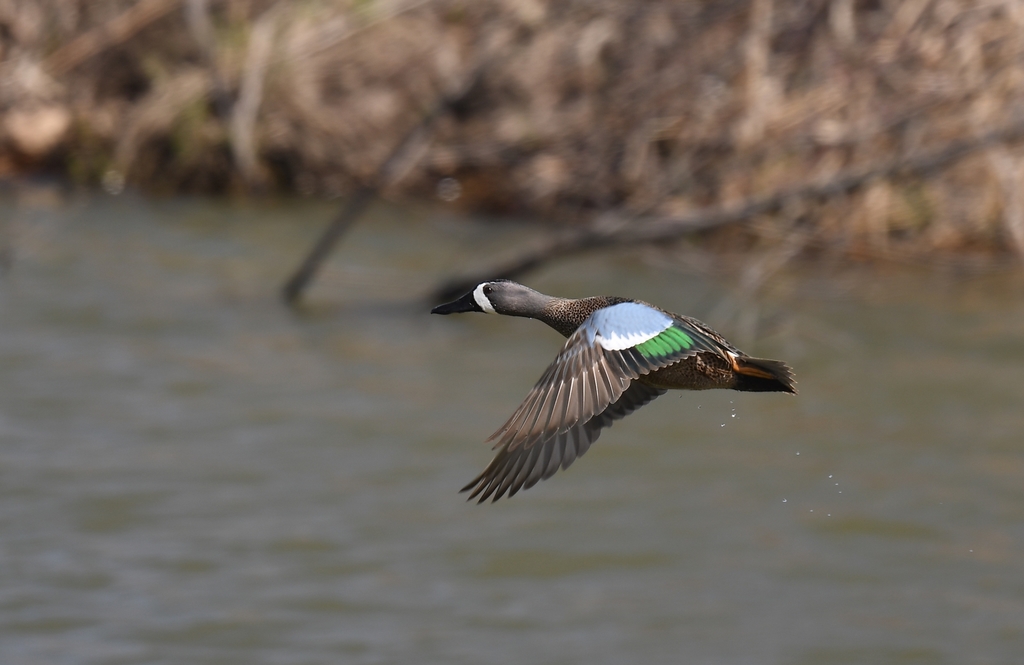
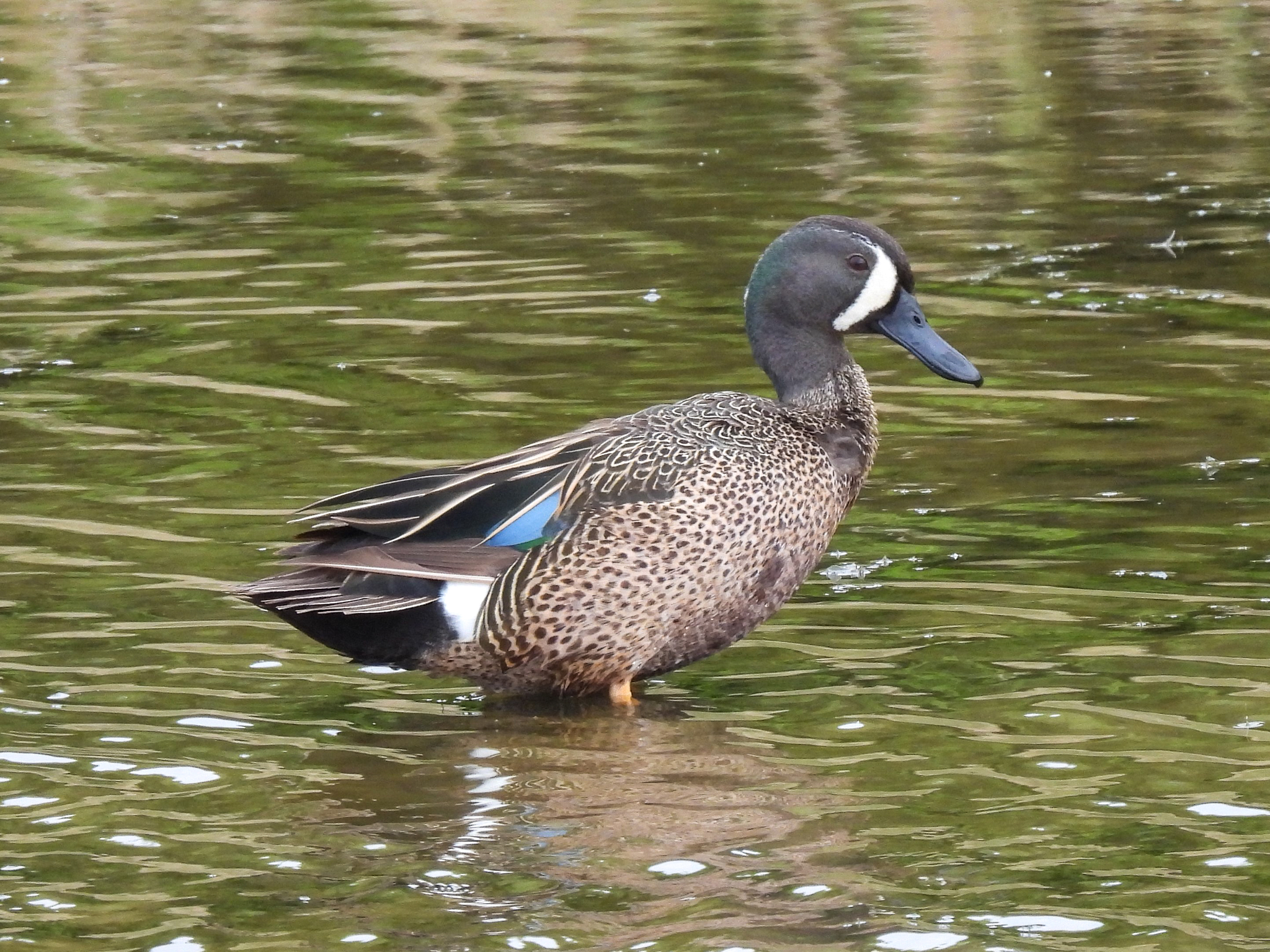
A small, brown duck with pale blue shoulder patches. The male has a gray head and white crescent in front of the eye. The female is mottled brown. In flight, they flap their wings very rapidly and fly in compact flocks. The Blue-winged Teal breeds across Canada and the northern U.S. and migrates very early in the fall and very late in the spring. Only about 5% of the population winter in the U.S., while the remaining 95% migrate more south.
Blue-winged Teal
Spatula discors
Least Concern
Quick Facts
Kingdom:
Animalia
Abundance:
Common
Habitat:
Wetland
Activity:
Diurnal (Active during day)
Lifespan:
Up to 17 years
Overview
Eat a variety of aquatic invertebrates, including insects, crustaceans, snails, and small clams, aquatic vegetation and seeds.
Diurnal (Active during day)
Classification
Kingdom:
Animalia
→
Phylum:
Chordata
→
Class:
Aves
→
Order:
Anseriformes
→
Family:
Anatidae
→
Genus:
Spatula
→
Species:
Spatula discors
Scientific Name
Spatula discors
Characteristics
Breeding Season
Late spring to early summer
Migration Pattern
Migrates south in winter
Lifespan
Up to 17 years
Behavior & Ecology
Behavior
Blue-winged teal are highly gregarious, tending to move in or form a group with others of the same species. The only time they are not social is during breeding season. Blue-winged teal migrate between wintering and breeding ranges each year. They are active during the day. Blue-winged teal can walk well on land and in shallow water.
Activity Pattern
Diurnal (Active during day)
Habitat & Distribution
Habitat Types
Geographic Distribution
During the summer months, blue-winged teal can be found throughout North America, from southeastern Alaska to the Atlantic coast. They are also found in the continental U.S. in the Great Plains as far south as the Gulf Coast of Texas and Louisiana. In the winter months they migrate southwards to the Carolinas, southern California, and New Mexico and into tropical South America.
Local Abundance
Common
Conservation
Conservation Status
Least Concern
This species is widespread and abundant. No immediate threat to survival.
How You Can Help
- Report sightings to contribute to population monitoring
- Support habitat conservation efforts
- Follow guidelines when observing wildlife
Contribute Your Observations
Have you spotted this species? Your observations help us track populations and understand behavior patterns.
Submit an ObservationGallery
Audio Call
This recording may not play in your browser. Download the recording
Learn more
More about this species on All About Birds ↗ (opens in a new tab)