Eastern Diamondback Rattler

Eastern Diamondback Rattler

Crotalus adamanteus

Dangerous Least Concern

Quick Facts

Kingdom: Animalia
Abundance: Uncommon
Habitat: Coastal
Active Seasons: Spring, Summer, Fall
Activity: Diurnal (Active during day)
Lifespan: 10 - 20 years

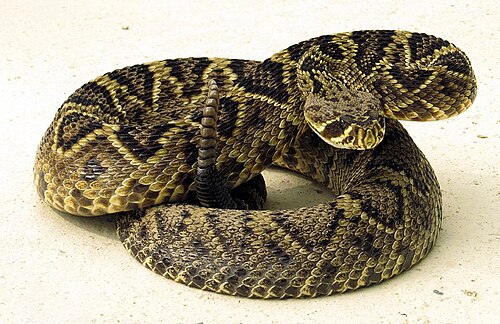
Large, heavy-bodied rattlesnake with bold dark diamond shapes outlined in lighter scales along the back; distinct rattle at tail tip; typically gray/brown with darker patterning; head broad with a dark facial stripe. Often associated with pine flatwoods, sandhills, scrub, and coastal plain habitats.

Diet

Primarily small mammals (and other small vertebrates).

Activity Pattern

Diurnal (Active during day)
Kingdom: Animalia
Phylum: Chordata
Class: Reptilia
Order: Squamata
Family: Viperidae
Genus: Crotalus
Species: C. adamanteus

Scientific Name

Crotalus adamanteus
Breeding Season
late summer - fall (varies by latitude; often described as Aug–Sep in northern range and Oct–Dec in far south; some sources note spring mating can occur)
Nesting Season
N/A (live-bearing); young typically born mid-July – October
Migration Pattern
No migration (non-migratory; seasonal movements within home range)
Lifespan
10 - 20 years

Tracks or Signs

Shed skins; distinctive rattle sound; large serpentine tracks in sand/soil (often indistinct).

Behavior

Generally solitary; uses cover and ambush hunting; may den/overwinter in refuges.

Ecological Role

Apex/near-apex predator of small mammals in coastal plain ecosystems.

Safety Warning

This species can be dangerous to humans. Exercise caution and maintain a safe distance if encountered.

Active Seasons

Spring Summer Fall

Activity Pattern

Diurnal (Active during day)

Habitat Types

Coastal

Geographic Distribution

Southeastern U.S. coastal plain (historically broad across parts of the Southeast; declined/possibly extirpated in some areas).

Local Abundance

Uncommon

Range Map

Range map

Conservation Status

Least Concern

This species is widespread and abundant. No immediate threat to survival.

Threats & Impacts

Habitat loss/fragmentation and intentional killing; exploitation/collection issues documented in conservation materials.

How You Can Help

  • Report sightings to contribute to population monitoring
  • Support habitat conservation efforts
  • Follow guidelines when observing wildlife

Additional Notes

Large rattlesnake; treat as high-risk venomous species.

Contribute Your Observations

Have you spotted this species? Your observations help us track populations and understand behavior patterns.

Submit an Observation

Audio Call