
Brown Anole

Brown Anole

Anolis sagrei

Least Concern

Quick Facts

Kingdom: Animalia
Abundance: Common
Habitat: Urban
Active Seasons: Spring, Summer, Fall
Activity: Diurnal (Active during day)
Lifespan: Commonly < 2 years

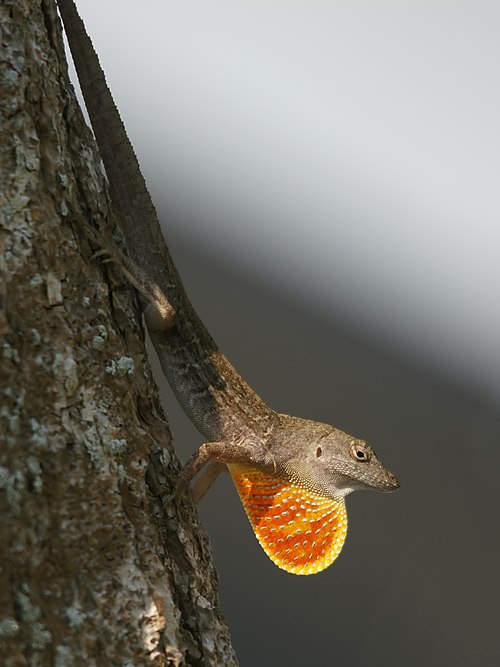
Small mostly-brown anole with variable patterning; males have an orange-red dewlap; often found low to the ground on trunks, fences, and leaf litter. Native to Cuba/Bahamas; widely introduced and established in Florida and into parts of the Southeast (including southern Georgia).

Diet

Insects and other small invertebrates.

Activity Pattern

Diurnal (Active during day)
Kingdom: Animalia
Phylum: Chordata
Class: Reptilia
Order: Squamata
Family: Dactyloidae
Genus: Anolis
Species: A. sagrei

Scientific Name

Anolis sagrei
Breeding Season
March/April - Aug/Sep
Nesting Season
Eggs laid repeatedly during breeding season (often spring–summer; eggs hatch ~30 - 45 days depending on temperature)
Migration Pattern
No Migration
Lifespan
Commonly < 2 years

Tracks or Signs

Visual sightings close to ground; male dewlap displays.

Behavior

Territorial males; competitive interactions with other anoles.

Ecological Role

Introduced predator of insects; can affect native anole behavior/distribution.

Active Seasons

Spring Summer Fall

Activity Pattern

Diurnal (Active during day)

Habitat Types

Urban

Geographic Distribution

Native Caribbean; introduced widely, established in Florida and spreading/recorded northward into parts of the Southeast (including southern Georgia).

Local Abundance

Common

Conservation Status

Least Concern

This species is widespread and abundant. No immediate threat to survival.

Threats & Impacts

Not typically threatened; more often considered an introduced competitor.

How You Can Help

  • Report sightings to contribute to population monitoring
  • Support habitat conservation efforts
  • Follow guidelines when observing wildlife

Additional Notes

Frequently observed in landscaped areas and disturbed habitats.

Contribute Your Observations

Have you spotted this species? Your observations help us track populations and understand behavior patterns.

Submit an Observation