
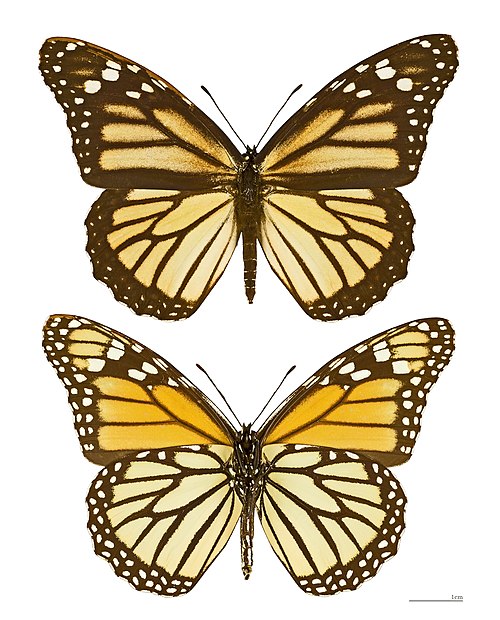
Monarch Butterfly

Monarch Butterfly

Danaus plexippus

Vulnerable

Quick Facts

Kingdom: Animalia
Abundance: Common
Habitat: Grassland
Active Seasons: Spring, Summer, Fall
Activity: Diurnal (Active during day)
Lifespan: Breeding-season adults typically 2–5 weeks; migratory generation can persist ~6–9 months

Large orange-and-black butterfly with black veins and white spots along margins; famous for long-distance migrations in North America. Caterpillars feed on milkweeds (Asclepias spp.), sequestering toxins that make monarchs distasteful to many predators.

Diet

Adults nectar on flowers; larvae feed on milkweed leaves.

Activity Pattern

Diurnal (Active during day)
Kingdom: Animalia
Phylum: Arthropoda
Class: Insecta
Order: Lepidoptera
Family: Nymphalidae
Genus: Danaus
Species: D. plexippus

Scientific Name

Danaus plexippus
Breeding Season
Spring - Summer (breeds and lays eggs during spring journey and through spring/summer; fall migrants enter reproductive diapause)
Nesting Season
N/A (insect); eggs laid on milkweed during spring–summer breeding period
Migration Pattern
Long-distance migration: fall migration south to overwintering sites; multi-generational return north in spring
Lifespan
Breeding-season adults typically 2–5 weeks; migratory generation can persist ~6–9 months

Tracks or Signs

Milkweed with striped caterpillars, eggs on milkweed leaves, jade-green chrysalis, adults nectaring.

Behavior

Long-distance migration; communal overwintering in well-known sites.

Ecological Role

Pollinator; indicator species for habitat quality and milkweed availability.

Active Seasons

Spring Summer Fall

Activity Pattern

Diurnal (Active during day)

Habitat Types

Grassland

Geographic Distribution

Widespread; migratory populations occur across much of North America with well-known migrations.

Local Abundance

Common

Range Map

Range map

Conservation Status

Vulnerable

This species faces a high risk of extinction in the wild.

Threats & Impacts

Habitat loss (milkweed/nectar resources), climate impacts, and other pressures noted in IUCN-related materials.

How You Can Help

  • Report sightings to contribute to population monitoring
  • Support habitat conservation efforts
  • Follow guidelines when observing wildlife

Additional Notes

If your database separates “species” vs “migratory population,” note that some statuses apply specifically to migratory populations.

Contribute Your Observations

Have you spotted this species? Your observations help us track populations and understand behavior patterns.

Submit an Observation