
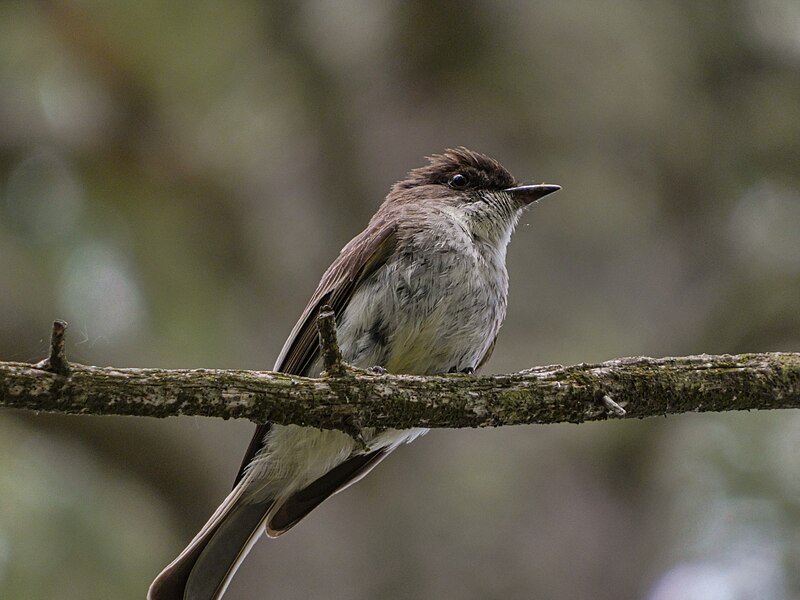
Eastern Phoebe

Eastern Phoebe

Sayornis phoebe

Least Concern

Quick Facts

Kingdom: Animalia
Abundance: Common
Habitat: Forest, Wetland, Urban
Active Seasons: Spring, Summer, Fall, Winter
Activity: Diurnal (Active during day)
Lifespan: 3 to 4 years on average in the wild; the oldest recorded individual was at least 10 years, 4 months old

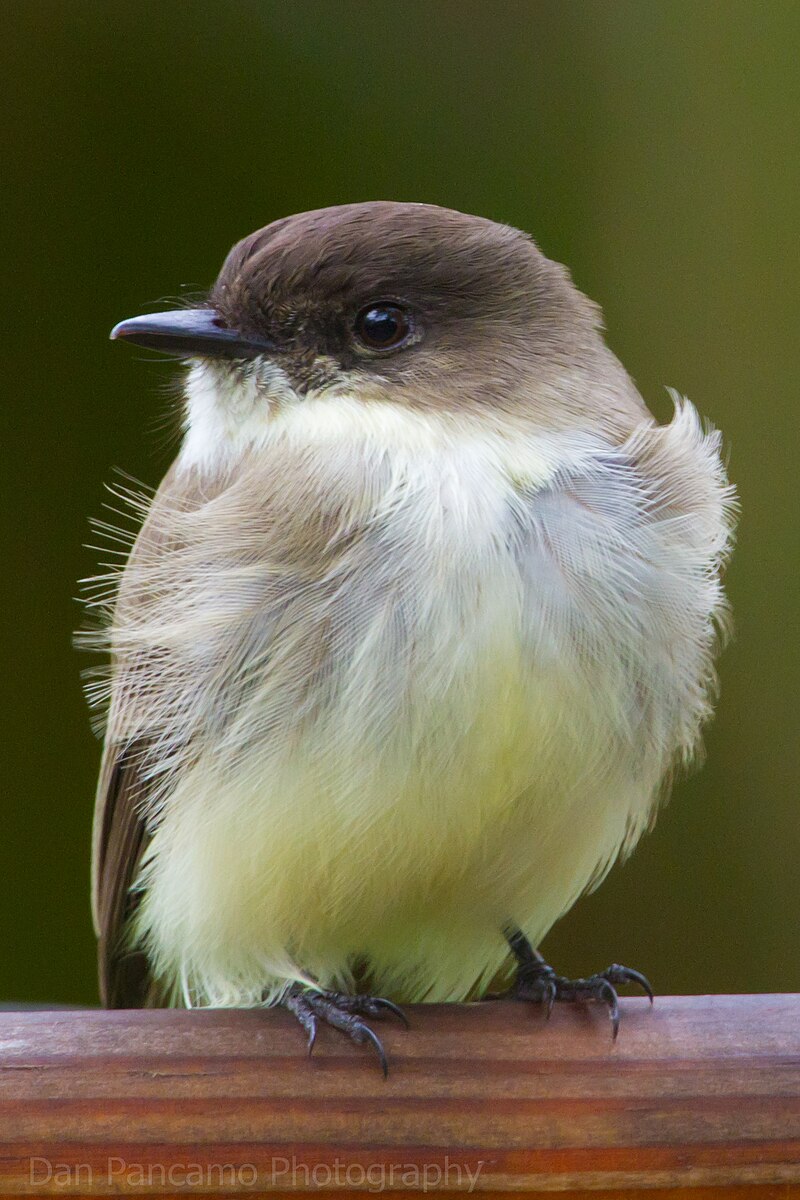
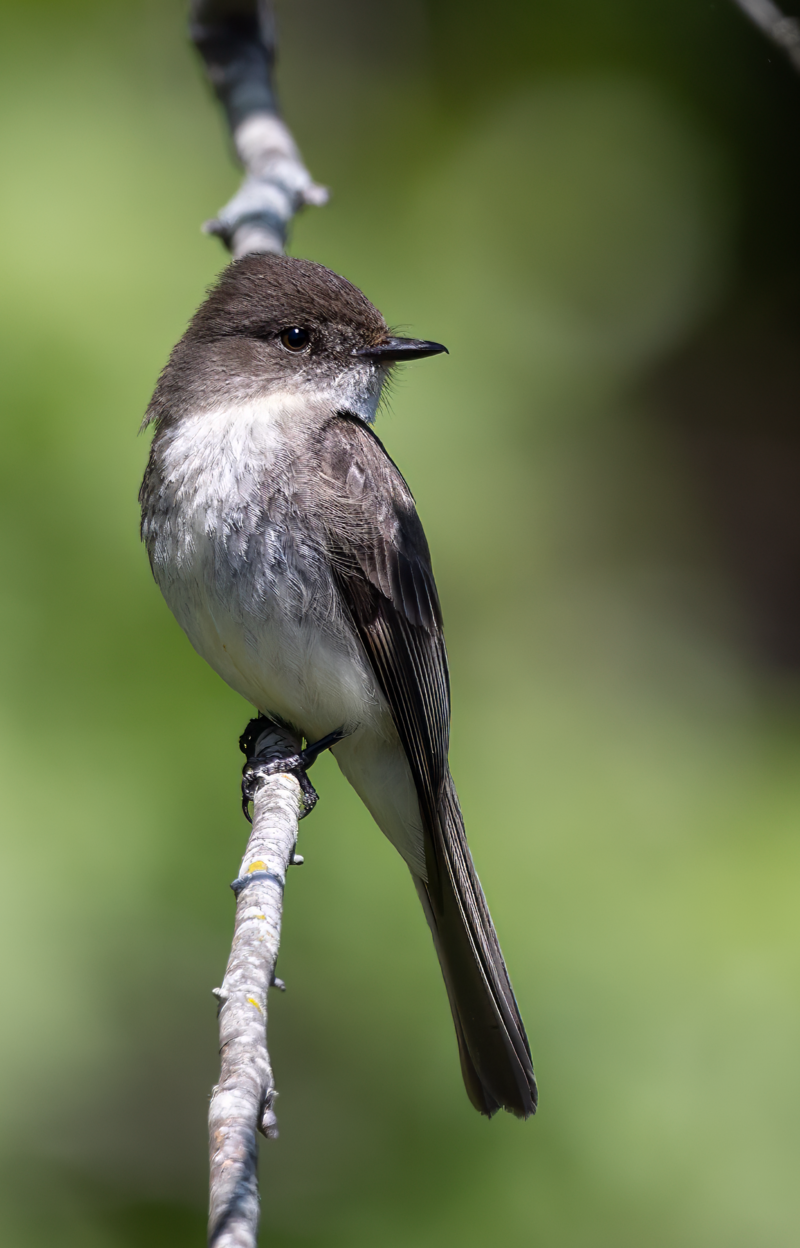
The Eastern Phoebe is a small, plump flycatcher measuring 5.5 to 7 inches in length with a wingspan of about 10.5 inches. It has plain gray-brown upperparts, a white throat, a dingy gray breast, and pale buffy-white underparts that become whiter during the breeding season. It lacks the eye ring and wing bars typical of other flycatchers, and has an all-dark bill. One of its most distinctive behaviors is a constant downward tail-pumping motion when perched.

Diet

Primarily insectivorous, feeding on small wasps, bees, beetles, flies, true bugs, grasshoppers, moths, and other flying insects captured in quick sallies from exposed perches. Also takes spiders, ticks, and millipedes. Small fruits and berries, including poison ivy berries, sumac, and dogwood fruits, supplement the diet during fall and winter when insects are scarce.

Activity Pattern

Diurnal (Active during day)
Kingdom: Animalia
โ†’
Phylum: Chordata
โ†’
Class: Aves
โ†’
Order: Passeriformes
โ†’
Family: Tyrannidae
โ†’
Genus: Sayornis
โ†’
Species: S. phoebe

Scientific Name

Sayornis phoebe
Breeding Season
Mid-March through July in the southeastern US; may raise two broods per season
Nesting Season
April through July; builds a mud, moss, and leaf nest on sheltered ledges such as bridge undersides, building eaves, culverts, and occasionally bare rock outcrops, typically near water
Migration Pattern
Short-distance migrant; one of the earliest spring migrants among flycatchers, arriving in the Southeast in late February to March and departing in September to October; winters in the southern US and Mexico
Lifespan
3 to 4 years on average in the wild; the oldest recorded individual was at least 10 years, 4 months old

Behavior

Eastern Phoebes are solitary flycatchers that perch on exposed, low branches and scan for flying insects, darting out in quick aerial sallies to snatch prey before returning to the same or a nearby perch. They constantly pump their tails downward in a distinctive bobbing motion while perched. Their song, a raspy two-note "fee-bee" repeated insistently, is one of the first bird songs heard in spring. They show a strong fidelity to nesting sites, often returning to the same structure year after year, and readily adapt to human-built structures for nesting.

Ecological Role

As aerial insectivores, Eastern Phoebes play a significant role in controlling populations of flying insects including mosquitoes, wasps, beetles, and flies in riparian and woodland habitats. Their preference for nesting on human structures has made them one of the most closely associated wild birds with human habitations in rural areas. They serve as prey for small hawks, owls, and snakes, and their nests are frequently parasitized by Brown-headed Cowbirds.

Active Seasons

Spring Summer Fall Winter

Activity Pattern

Diurnal (Active during day)
Habitat Types

Forest
Wetland
Urban

Geographic Distribution

The Eastern Phoebe breeds across eastern North America from the Canadian Maritime provinces south to the Gulf Coast and west to the Great Plains. In the southeastern United States, it is a widespread and familiar bird found throughout Georgia and South Carolina. In the River Island Conservancy area near Augusta, GA, Eastern Phoebes are common along wooded stream corridors, forest edges, bridges over creeks, and around buildings and structures near the Savannah River. They are among the earliest spring migrants to return to the area and one of the last to depart, with some individuals overwintering in the region during mild years.

Elevation Range

0-5000 ft

Local Abundance

Common

Conservation Status

Least Concern

This species is widespread and abundant. No immediate threat to survival.

Threats & Impacts

Habitat degradation along waterways and removal of nesting structures can reduce local populations. Brown-headed Cowbird brood parasitism is a significant threat to reproductive success. Pesticide use that reduces insect prey populations poses an indirect threat. Severe late-spring cold snaps can cause mortality, particularly for early-arriving migrants.

How You Can Help

  • Report sightings to contribute to population monitoring
  • Support habitat conservation efforts
  • Follow guidelines when observing wildlife
No field notes or observations available for this species.

Contribute Your Observations

Have you spotted this species? Your observations help us track populations and understand behavior patterns.

Submit an Observation

Gallery