
Eastern Screech-Owl

Eastern Screech-Owl

Megascops asio

Least Concern

Quick Facts

Kingdom: Animalia
Abundance: Common
Habitat: Forest, Urban, Wetland
Active Seasons: Spring, Summer, Fall, Winter
Activity: Nocturnal (Active at night)
Lifespan: 3 to 7 years on average in the wild; the oldest recorded individual was at least 14 years, 6 months old

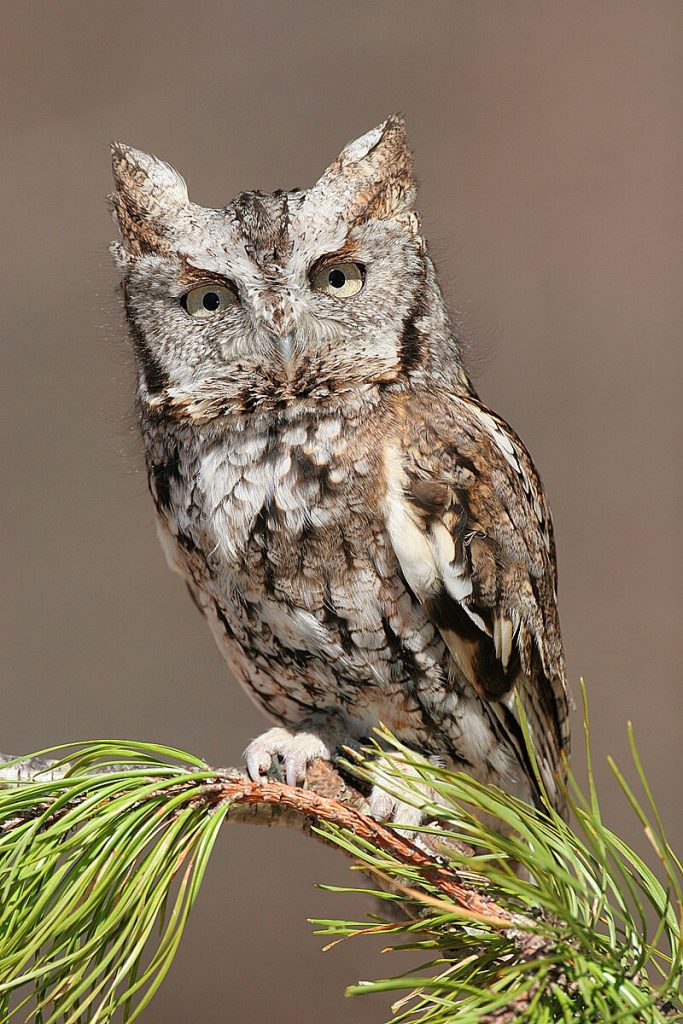
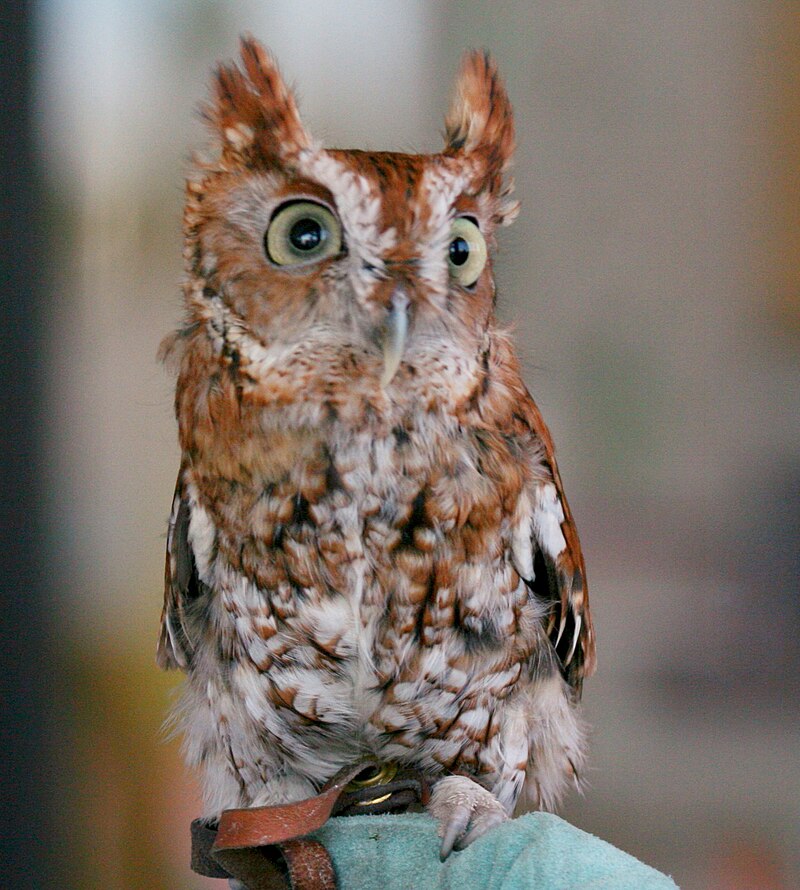
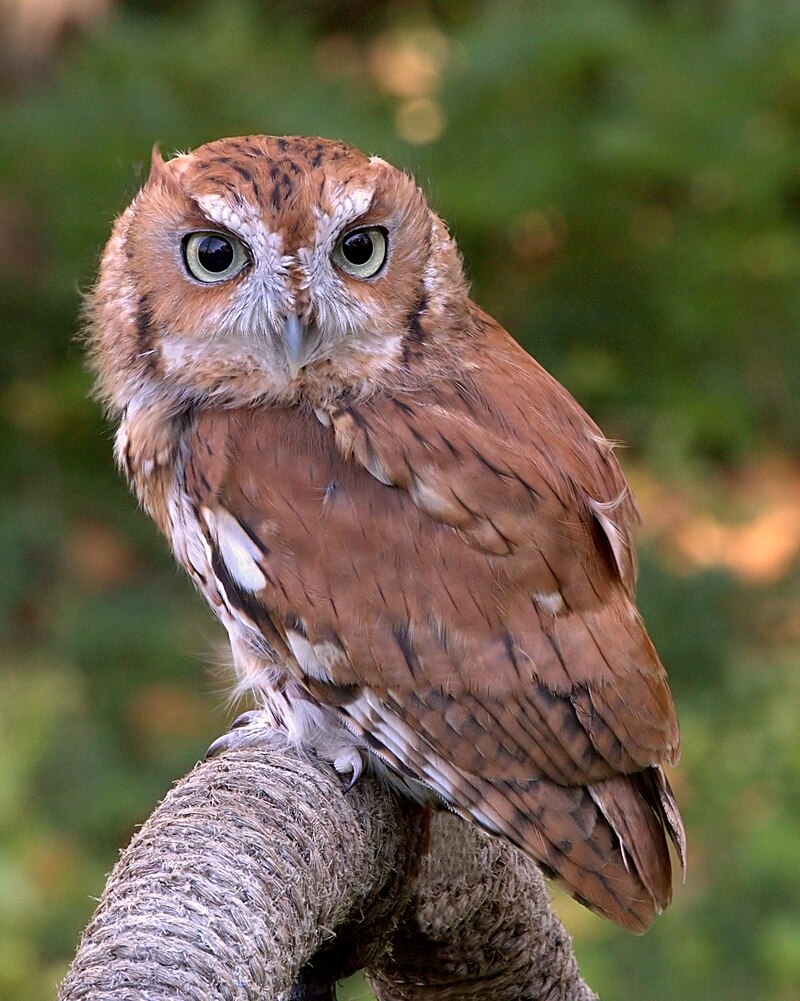
The Eastern Screech-Owl is a small, stocky owl standing about 6 to 10 inches tall with a wingspan of 19 to 24 inches. It occurs in two color morphs: gray and rufous (reddish-brown), with some intermediate brown individuals. Both morphs feature prominent ear tufts, large yellow eyes, and a yellow-green bill. Its heavily streaked and barred plumage provides excellent camouflage against tree bark, making it nearly invisible when roosting in a tree cavity entrance during the day.

Diet

The most varied diet of any North American owl. Feeds on large insects including beetles, moths, crickets, grasshoppers, and cicadas, which make up over half the diet. Also takes small mammals such as mice, voles, shrews, and young rats; small birds; frogs and toads; lizards; earthworms; crayfish; and small fish. Hunts opportunistically from low perches, using sharp hearing and vision to locate prey in darkness.

Activity Pattern

Nocturnal (Active at night)
Kingdom: Animalia
โ†’
Phylum: Chordata
โ†’
Class: Aves
โ†’
Order: Strigiformes
โ†’
Family: Strigidae
โ†’
Genus: Megascops
โ†’
Species: M. asio

Scientific Name

Megascops asio
Breeding Season
February through June; courtship begins in late winter with males calling from potential nest cavities
Nesting Season
March through June; nests in natural tree cavities, old woodpecker holes, and readily accepts nest boxes; does not add nesting material; clutch of 2 to 6 eggs incubated for 27 to 34 days
Migration Pattern
Non-migratory; a permanent year-round resident throughout its entire range
Lifespan
3 to 7 years on average in the wild; the oldest recorded individual was at least 14 years, 6 months old

Behavior

Eastern Screech-Owls are strictly nocturnal, roosting during the day in tree cavities, dense foliage, or nest boxes, often sunning themselves at the cavity entrance in the late afternoon. They hunt from dusk to dawn, with peak activity in the first four hours of darkness, using a sit-and-wait strategy from low perches before swooping down on prey. Their primary vocalizations include a distinctive descending whinny trill and a monotone tremolo call. Despite their small size, they are fierce and versatile predators, earning the early naturalist nickname "feathered wildcats." They are monogamous and pairs may use the same nesting territory for many years.

Ecological Role

Eastern Screech-Owls are important nocturnal predators that help control populations of rodents, large insects, and other small animals. As cavity nesters, they depend on and contribute to the ecological community of tree-cavity-dwelling species. They serve as prey for larger owls, especially Great Horned Owls and Barred Owls, as well as for hawks and raccoons. Their presence is an indicator of healthy woodland habitats with mature trees providing suitable cavities.

Active Seasons

Spring Summer Fall Winter

Activity Pattern

Nocturnal (Active at night)
Habitat Types

Forest
Urban
Wetland

Geographic Distribution

The Eastern Screech-Owl is found throughout the eastern United States and southeastern Canada, from the Great Plains eastward to the Atlantic Coast, and from southern Canada south to northeastern Mexico. It is one of the most common owls in the Southeast. In the River Island Conservancy area near Augusta, GA, Eastern Screech-Owls are year-round residents in deciduous and mixed forests, wooded suburban neighborhoods, orchards, parks, and mature shade trees along the Savannah River corridor. Both gray and rufous morphs occur in the region, with the rufous morph being somewhat more common in the southeastern part of the range.

Elevation Range

0-5000 ft

Local Abundance

Common

Conservation Status

Least Concern

This species is widespread and abundant. No immediate threat to survival.

Threats & Impacts

Loss of mature trees and snags that provide nesting and roosting cavities is the primary threat. Collisions with vehicles during nighttime hunting are a significant source of mortality. Predation by Great Horned Owls and Barred Owls limits populations in some areas. Pesticide use reduces insect prey and can cause secondary poisoning through contaminated rodents. Light pollution can disrupt hunting behavior.

How You Can Help

  • Report sightings to contribute to population monitoring
  • Support habitat conservation efforts
  • Follow guidelines when observing wildlife
No field notes or observations available for this species.

Contribute Your Observations

Have you spotted this species? Your observations help us track populations and understand behavior patterns.

Submit an Observation

Gallery