
Lifespan:Average about 5 years in the wild; the oldest recorded individual lived 11 years and 7 months
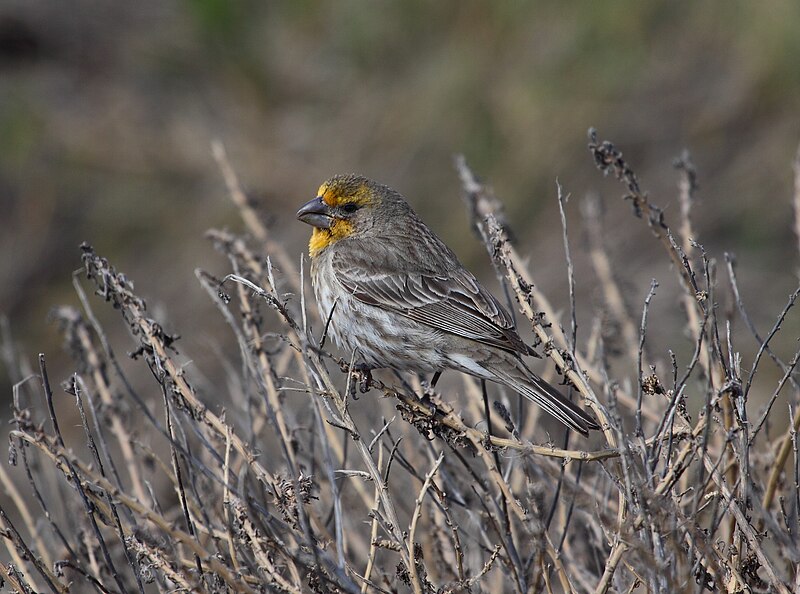
The House Finch is a small songbird about 12.5 to 15 cm in length with a wingspan of approximately 20 to 25 cm. Adult males have a rosy-red head, breast, and rump contrasting with a streaky brown back, wings, and tail; the intensity and shade of red varies among individuals, with some appearing orange or yellow depending on diet. Females and juveniles are plain grayish-brown overall with blurry brown streaks on the underparts and a nondescript face lacking the bold markings of similar finch species. Both sexes have a short, stout conical bill well-suited for cracking seeds.
Diet
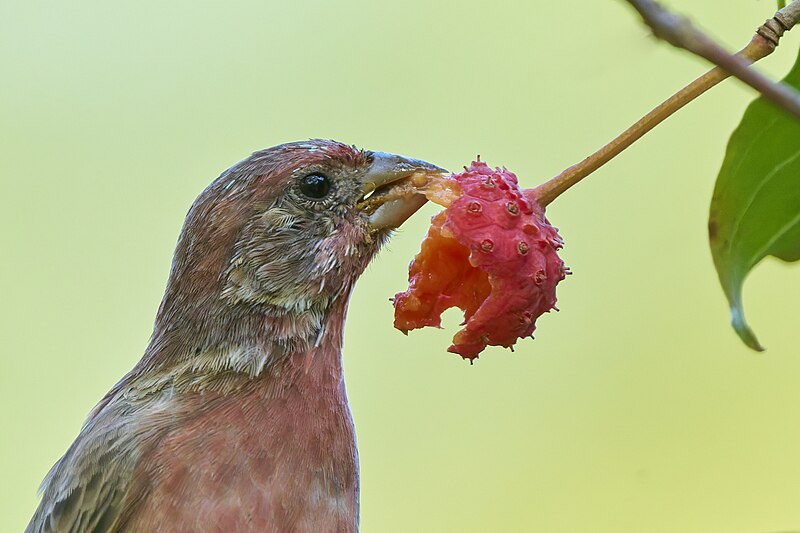
Almost exclusively granivorous and herbivorous. Feeds on seeds of weedy plants including thistle, dandelion, and nettle, as well as cultivated seeds like sunflower, nyjer, and millet at bird feeders. Also eats buds, fruit, and berries including cherries, mulberries, and cactus fruit. Rarely consumes insects, relying on plant matter for the vast majority of its diet. Nestlings are fed regurgitated seeds rather than insects, which is unusual among songbirds.
Activity Pattern
Diurnal (Active during day)
Kingdom:Animalia
โ
Phylum:Chordata
โ
Class:Aves
โ
Order:Passeriformes
โ
Family:Fringillidae
โ
Genus:Haemorhous
โ
Species:H. mexicanus
Scientific Name
Haemorhous mexicanus
Breeding Season
March through August
Nesting Season
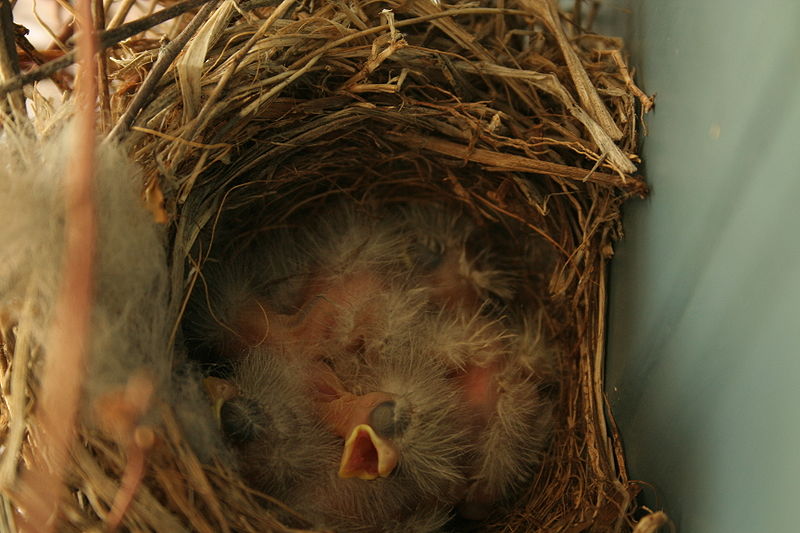
February through August; may produce two or more broods per year with 2 to 6 eggs per clutch (usually 4 to 5). Female incubates for 12 to 14 days and young fledge at 11 to 19 days.
Migration Pattern
Mostly non-migratory; largely a permanent resident throughout its range, though some eastern populations make short southward movements in fall. Females tend to migrate farther than males.
Lifespan
Average about 5 years in the wild; the oldest recorded individual lived 11 years and 7 months
Behavior
House Finches are highly gregarious, forming large flocks outside of the breeding season that congregate at feeders and weedy seed patches. They are socially monogamous, with males performing a courtship display that includes offering food to the female. Males sing a long, warbling song from prominent perches, often on rooftops, utility wires, or tree tops. Nests are built in a variety of locations including building ledges, hanging planters, dense vines, and other sheltered spots close to human habitation. They may reuse nests for subsequent broods or in following years.
Ecological Role
House Finches are important seed consumers that can influence the abundance and distribution of weedy plant species. Their heavy reliance on seeds makes them key participants in seed dispersal and plant population dynamics. They serve as prey for raptors such as Cooper's Hawks and Sharp-shinned Hawks, as well as domestic cats. The species has also played a significant role in the study of disease ecology, as the mycoplasmal conjunctivitis epidemic that swept through eastern populations beginning in 1994 provided researchers with valuable data on wildlife disease transmission.
Active Seasons
Spring
Summer
Fall
Winter
Activity Pattern
Diurnal (Active during day)
Habitat Types
Urban
Grassland
Forest
Geographic Distribution
The House Finch is found across nearly all of North America from southern Canada through Mexico. Originally native to the dry open habitats of the western United States and Mexico, it was introduced to the eastern US in the 1940s when captive birds were released on Long Island, New York. It has since spread throughout the eastern half of the continent. In the Augusta, GA area and the River Island Conservancy, House Finches are common year-round residents found in suburban neighborhoods, around bird feeders, in parks and gardens, and along weedy field edges throughout the Central Savannah River Area.
Elevation Range
0-6000 ft
Local Abundance
Common
Conservation Status
Least Concern
This species is widespread and abundant. No immediate threat to survival.
Threats & Impacts
Mycoplasmal conjunctivitis (House Finch eye disease) has caused significant population declines in eastern populations since 1994, causing respiratory problems and swollen, red eyes that make birds vulnerable to predation and starvation. Other threats include predation by domestic and feral cats, window collisions, and habitat changes. Despite the eye disease epidemic, the overall population remains large and the species is not considered at risk.
How You Can Help
Report sightings to contribute to population monitoring
Support habitat conservation efforts
Follow guidelines when observing wildlife
No field notes or observations available for this species.
Contribute Your Observations
Have you spotted this species? Your observations help us track populations and understand behavior patterns.