
American Goldfinch

American Goldfinch

Spinus tristis

Least Concern

Quick Facts

Kingdom: Animalia
Abundance: Common
Habitat: Grassland, Forest, Urban
Active Seasons: Spring, Summer, Fall, Winter
Activity: Diurnal (Active during day)
Lifespan: 3 to 6 years on average in the wild; the oldest recorded individual was 10 years and 9 months old

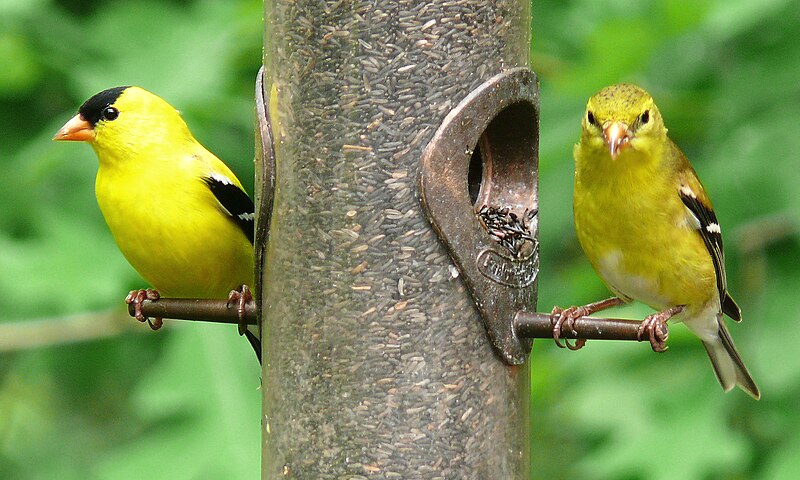
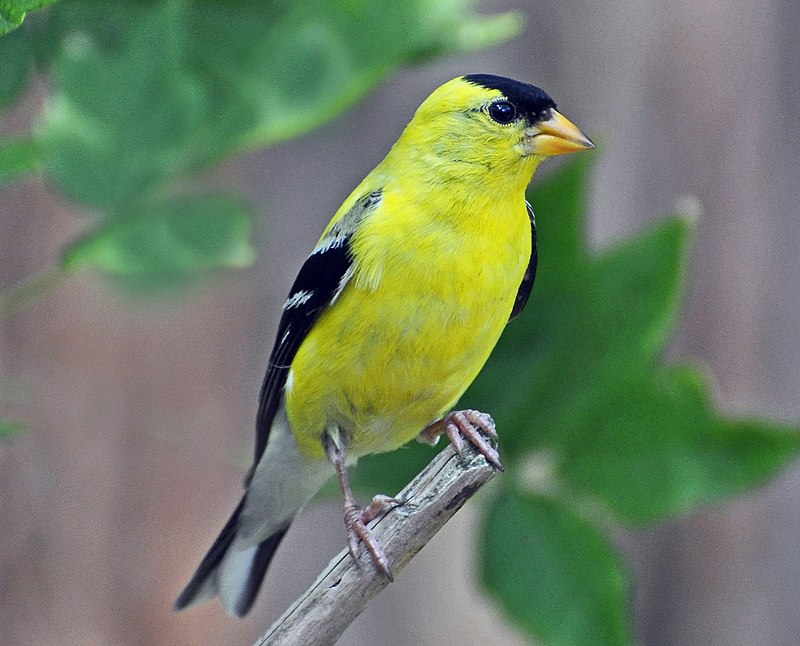
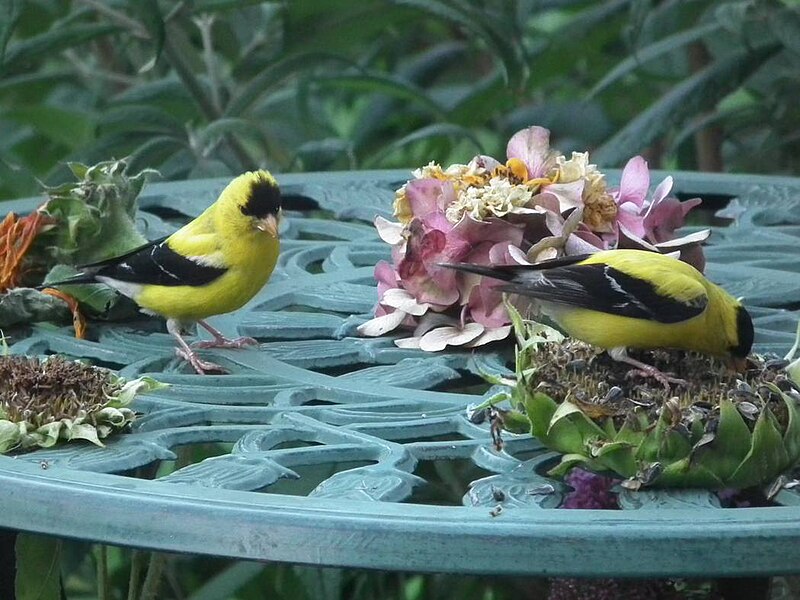
The American Goldfinch is a small finch measuring 11 to 13 cm in length with a wingspan of 20 to 22 cm and a weight of 11 to 20 grams. Breeding males are a striking brilliant lemon-yellow with a jet-black cap, black wings with white wing bars, and a white rump visible in flight. Females and non-breeding males are a subdued olive-brown with darker wings and faint wing bars. The species has a conical, pinkish bill adapted for extracting seeds from seed heads, and it undergoes two complete molts per year, making it the only cardueline finch with this trait.

Diet

Among the strictest vegetarians in the bird world, feeding almost exclusively on seeds. Preferred food sources include seeds from composite plants such as thistles, dandelions, sunflowers, and coneflowers, along with seeds from grasses, birch, alder, and elm. They occasionally consume small insects inadvertently while feeding on seed heads. At feeders, they strongly prefer nyjer (thistle) seed and sunflower chips.

Activity Pattern

Diurnal (Active during day)
Kingdom: Animalia
โ†’
Phylum: Chordata
โ†’
Class: Aves
โ†’
Order: Passeriformes
โ†’
Family: Fringillidae
โ†’
Genus: Spinus
โ†’
Species: S. tristis

Scientific Name

Spinus tristis
Breeding Season
Late June through September
Nesting Season
July through September; one of the latest-nesting songbirds in North America, timing nesting to coincide with the availability of thistle and milkweed down for nest construction and seed crops for feeding young
Migration Pattern
Short-distance migrant; northern populations move south in winter while southeastern populations may be year-round residents or shift slightly southward depending on food availability
Lifespan
3 to 6 years on average in the wild; the oldest recorded individual was 10 years and 9 months old

Behavior

American Goldfinches are highly gregarious and form large flocks during the non-breeding season, often feeding together at seed heads and feeders. Their flight is distinctively undulating with a bouncy, roller-coaster pattern accompanied by a "po-ta-to-chip" flight call. They are among the latest-nesting songbirds, waiting until midsummer when thistle and milkweed produce the fibrous down used to build their compact, cup-shaped nests. The female builds the nest and incubates 4 to 6 pale blue eggs for 12 to 14 days. Males feed the female during incubation and help feed nestlings. Their bright plumage is produced by carotenoid pigments from their plant-based diet.

Ecological Role

American Goldfinches are important seed predators and dispersers that help regulate weed and wildflower populations. Their late nesting season means they serve as food sources for predators during a period when other songbird nests have fledged. They are also hosts for Brown-headed Cowbird eggs, though cowbird chicks rarely survive in goldfinch nests because the all-seed diet fails to provide enough protein for cowbird nestling development.

Active Seasons

Spring Summer Fall Winter

Activity Pattern

Diurnal (Active during day)
Habitat Types

Grassland
Forest
Urban

Geographic Distribution

The American Goldfinch breeds across southern Canada and the northern two-thirds of the United States, wintering from southern Canada through the southern United States into northern Mexico. In the southeastern US, it is found year-round across most of Georgia, South Carolina, and the broader Piedmont region. In the River Island Conservancy area near Augusta, GA, American Goldfinches are common visitors to weedy fields, meadows, and backyard feeders throughout the year, with numbers increasing in winter as northern migrants join the local population. They are frequently seen along roadsides and field edges where thistles, sunflowers, and other seed-bearing plants grow.

Elevation Range

0-5000 ft

Local Abundance

Common

Conservation Status

Least Concern

This species is widespread and abundant. No immediate threat to survival.

Threats & Impacts

Slight population declines have been observed over recent decades, likely due to habitat loss from development and agricultural intensification that removes weedy field edges and hedgerows. Pesticide and herbicide use reduces both food sources and nesting material plants like thistles and milkweed. Window collisions and outdoor cats also contribute to mortality.

How You Can Help

  • Report sightings to contribute to population monitoring
  • Support habitat conservation efforts
  • Follow guidelines when observing wildlife
No field notes or observations available for this species.

Contribute Your Observations

Have you spotted this species? Your observations help us track populations and understand behavior patterns.

Submit an Observation

Gallery