
Black-capped Chickadee

Black-capped Chickadee

Poecile atricapillus

Least Concern

Quick Facts

Kingdom: Animalia
Abundance: Rare
Habitat: Forest, Urban
Active Seasons: Spring, Summer, Fall, Winter
Activity: Diurnal (Active during day)
Lifespan: 2 to 3 years on average in the wild; the oldest recorded individual lived nearly 12 years

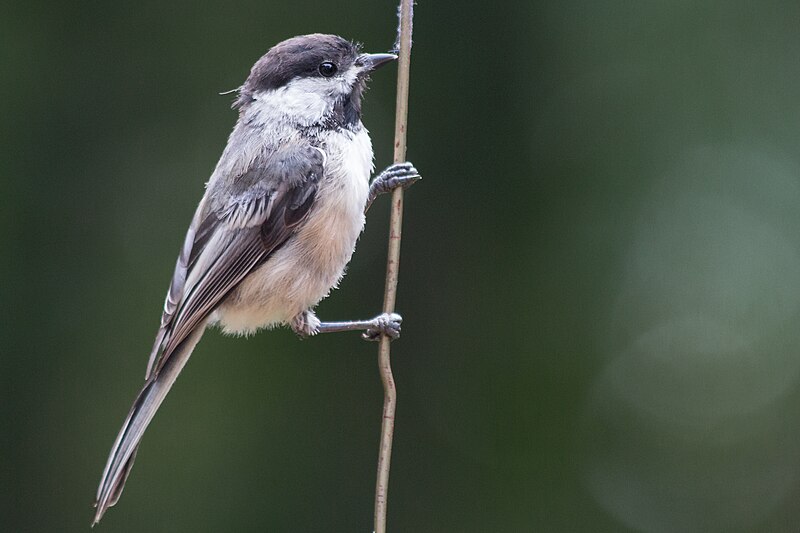
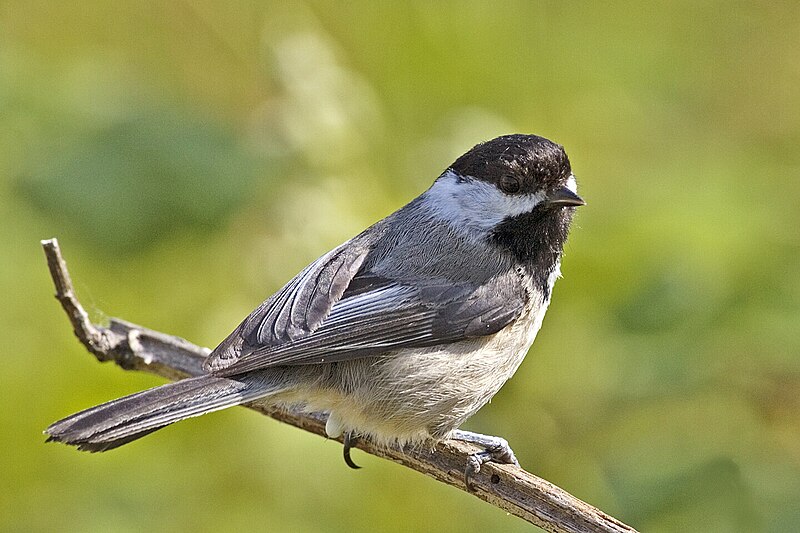
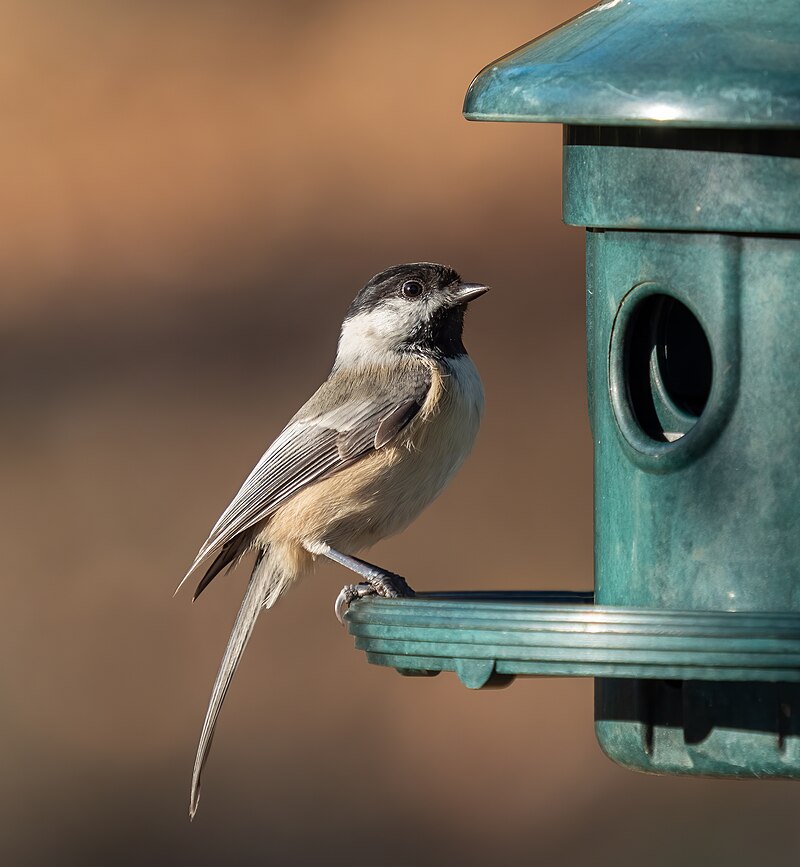
The Black-capped Chickadee is a small, nonmigratory passerine measuring 12 to 15 cm in length with a wingspan of 20 to 25 cm and a weight of 9 to 14 grams. It has a distinctive black cap and bib with bright white cheeks, a white belly, buff-colored sides, and gray wings, back, and tail. The wing feathers show noticeable white edging, which helps distinguish it from the closely related Carolina Chickadee. Its short, dark bill is well-suited for picking insects from bark and cracking small seeds.

Diet

Omnivorous, with roughly 70% of the diet consisting of animal matter including caterpillars, beetles, spiders, insect eggs, and larvae gleaned from bark and foliage. The remaining 30% is plant material, especially seeds of birch, alder, and hemlock, along with berries and suet from feeders. Black-capped Chickadees are prolific food cachers, hiding thousands of seeds and insect prey in bark crevices and under lichen for winter retrieval.

Activity Pattern

Diurnal (Active during day)
Kingdom: Animalia
โ†’
Phylum: Chordata
โ†’
Class: Aves
โ†’
Order: Passeriformes
โ†’
Family: Paridae
โ†’
Genus: Poecile
โ†’
Species: P. atricapillus

Scientific Name

Poecile atricapillus
Breeding Season
April through July
Nesting Season
April through July; the female lays 6 to 8 eggs and is the sole incubator for 12 to 13 days
Migration Pattern
Non-migratory; a permanent resident throughout its range with occasional irruptive movements southward during harsh winters
Lifespan
2 to 3 years on average in the wild; the oldest recorded individual lived nearly 12 years

Behavior

Black-capped Chickadees are bold, curious birds that readily approach humans and visit backyard feeders. They forage acrobatically through trees, often hanging upside down to probe bark crevices and leaf clusters. In winter, they form stable flocks with a well-defined dominance hierarchy, often associating with nuthatches, kinglets, and woodpeckers. They are cavity nesters that excavate their own nest holes in soft, rotting wood, typically in birch or alder snags. Their two-note "fee-bee" whistled song and buzzy "chick-a-dee-dee-dee" call are among the most studied vocalizations in ornithology, with the number of "dee" notes increasing in response to threat level.

Ecological Role

Black-capped Chickadees are significant consumers of insect pests, including moth caterpillars and bark beetles that damage forest trees. Their food-caching behavior contributes to seed dispersal, and forgotten cached seeds may germinate into new plants. As cavity excavators in soft wood, they create nesting opportunities later used by other small cavity-nesting species. Their alarm calls serve as an interspecific warning system that other forest birds rely upon for predator detection.

Active Seasons

Spring Summer Fall Winter

Activity Pattern

Diurnal (Active during day)
Habitat Types

Forest
Urban

Geographic Distribution

The Black-capped Chickadee is widely distributed across northern North America, from Alaska and Canada south through the northern United States. In the East, its range extends south along the Appalachian Mountains into northern Georgia and western North Carolina. In the River Island Conservancy area near Augusta, GA, this species is uncommon and is found primarily at higher elevations along the Appalachian foothills. The Augusta area lies near the southern edge of its range, where it overlaps and occasionally hybridizes with the more common Carolina Chickadee. Observers in the area are more likely to encounter the Carolina Chickadee at lower elevations.

Elevation Range

0-6500 ft

Local Abundance

Rare

Conservation Status

Least Concern

This species is widespread and abundant. No immediate threat to survival.

Threats & Impacts

Habitat loss from logging and development that removes dead and dying trees needed for nest excavation, competition for cavities from House Sparrows and European Starlings, pesticide use that reduces insect prey, and window collisions in suburban areas. Climate change is a concern as warming temperatures may shift the range boundary and hybrid zone with the Carolina Chickadee further north.

How You Can Help

  • Report sightings to contribute to population monitoring
  • Support habitat conservation efforts
  • Follow guidelines when observing wildlife

Additional Notes

The Black-capped Chickadee and Carolina Chickadee hybridize in a narrow contact zone along the Appalachian Mountains. In the Augusta, GA area, observers should carefully compare features to distinguish the two species, as identification can be challenging where their ranges meet.

Contribute Your Observations

Have you spotted this species? Your observations help us track populations and understand behavior patterns.

Submit an Observation

Gallery