
Lifespan:2 to 3 years on average in the wild; the oldest recorded individual lived over 8 years
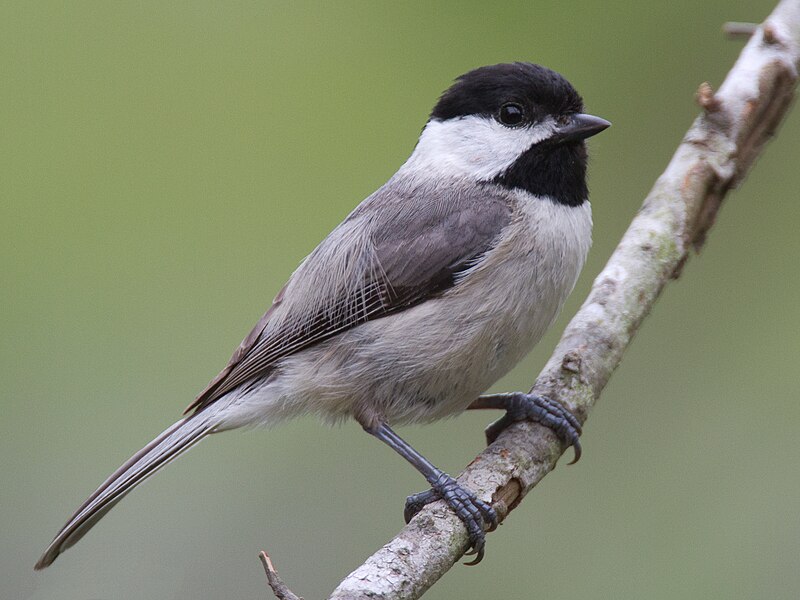
The Carolina Chickadee is a small, energetic songbird measuring 11.5 to 13 cm in length with a weight of 9 to 12 grams. It features a distinctive black cap and bib separated by bright white cheeks, with soft gray upperparts and pale buffy-white underparts. The wings and tail are a slightly darker gray with subtle pale edging, and the flanks are washed with a warm buff tone. Compared to the closely related Black-capped Chickadee, the Carolina Chickadee is slightly smaller with less white edging on the wing feathers and a neater bib border.
Diet
Insects and spiders form the majority of the diet during spring and summer, including caterpillars, beetles, aphids, and leafhoppers gleaned from branches and foliage. In fall and winter, seeds and berries become increasingly important, with favorites including sunflower seeds, pine seeds, bayberries, and poison ivy berries. Carolina Chickadees also cache food items for later retrieval.
Activity Pattern
Diurnal (Active during day)
Kingdom:Animalia
โ
Phylum:Chordata
โ
Class:Aves
โ
Order:Passeriformes
โ
Family:Paridae
โ
Genus:Poecile
โ
Species:P. carolinensis
Scientific Name
Poecile carolinensis
Breeding Season
March through June
Nesting Season
February through June; nest building and egg laying begin as early as February in southern portions of the range and April in northern areas
Migration Pattern
Non-migratory; a year-round resident throughout its range with very little seasonal movement
Lifespan
2 to 3 years on average in the wild; the oldest recorded individual lived over 8 years
Behavior
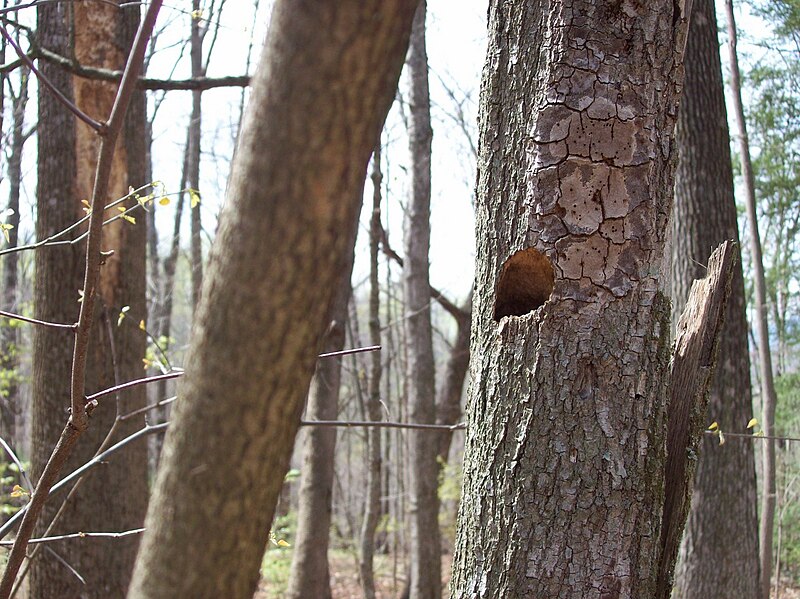
Carolina Chickadees are active, acrobatic foragers that hop along branches and often hang upside down to glean insects from bark and leaf clusters. They form small flocks of 8 to 10 birds in fall and winter, often joining mixed-species foraging flocks with titmice, nuthatches, and woodpeckers. They are cavity nesters, excavating or finding existing holes in dead trees or snags, typically 2 to 25 feet above ground. The female lays 3 to 10 eggs and incubates them for 12 to 15 days, with fledging occurring 16 to 19 days after hatching. Their familiar four-note "fee-bee-fee-bay" song is one of the most recognizable sounds of southeastern woodlands.
Ecological Role
Carolina Chickadees play an important role in controlling insect populations, consuming large quantities of caterpillars, beetles, and aphids that can damage trees and crops. As cavity nesters, they participate in the ecological succession of tree cavity use. Their alarm calls serve as a community alert system, warning other forest birds of approaching predators. They also contribute to seed dispersal and are an important prey species for small hawks and owls.
Active Seasons
Spring
Summer
Fall
Winter
Activity Pattern
Diurnal (Active during day)
Habitat Types
Forest
Urban
Geographic Distribution
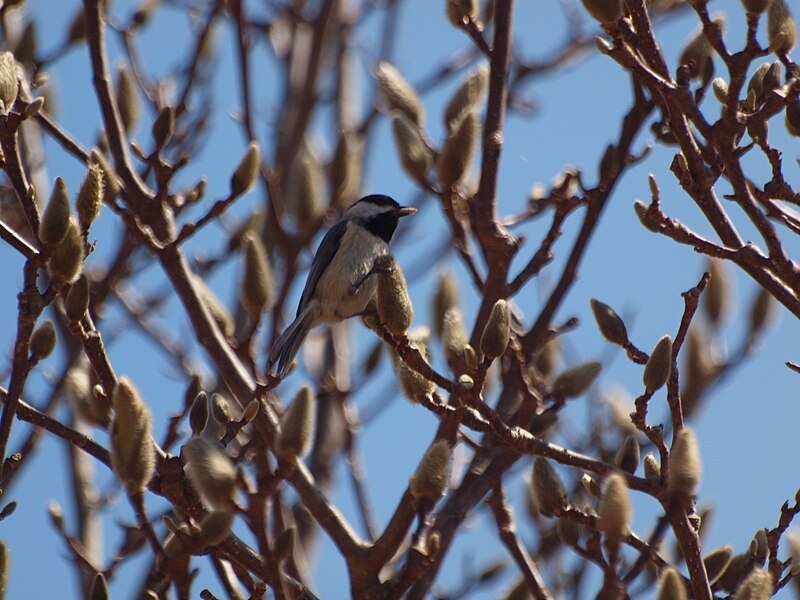
The Carolina Chickadee is found across the southeastern and mid-Atlantic United States, from New Jersey south to Florida and west to Texas and Oklahoma. It is the dominant chickadee species throughout the Piedmont and Coastal Plain of Georgia and South Carolina. In the River Island Conservancy area near Augusta, GA, Carolina Chickadees are abundant year-round residents in deciduous and mixed forests, suburban parks, and wooded neighborhoods along the Savannah River corridor. They readily visit backyard feeders and are one of the most commonly encountered songbirds in the region.
Elevation Range
0-4500 ft
Local Abundance
Common
Conservation Status
Least Concern
This species is widespread and abundant. No immediate threat to survival.
Threats & Impacts
Habitat loss from removal of dead trees and snags needed for nesting cavities, competition for nest sites from House Sparrows and European Starlings, pesticide use reducing insect prey availability, and window strikes in suburban areas. Climate change may be shifting the hybrid zone with Black-capped Chickadees northward.
How You Can Help
Report sightings to contribute to population monitoring
Support habitat conservation efforts
Follow guidelines when observing wildlife
No field notes or observations available for this species.
Contribute Your Observations
Have you spotted this species? Your observations help us track populations and understand behavior patterns.