
Chipping Sparrow

Chipping Sparrow

Spizella passerina

Least Concern

Quick Facts

Kingdom: Animalia
Abundance: Common
Habitat: Forest, Grassland, Urban
Active Seasons: Spring, Summer, Fall, Winter
Activity: Diurnal (Active during day)
Lifespan: 3 to 5 years on average in the wild; the oldest recorded individual was at least 10 years, 11 months old

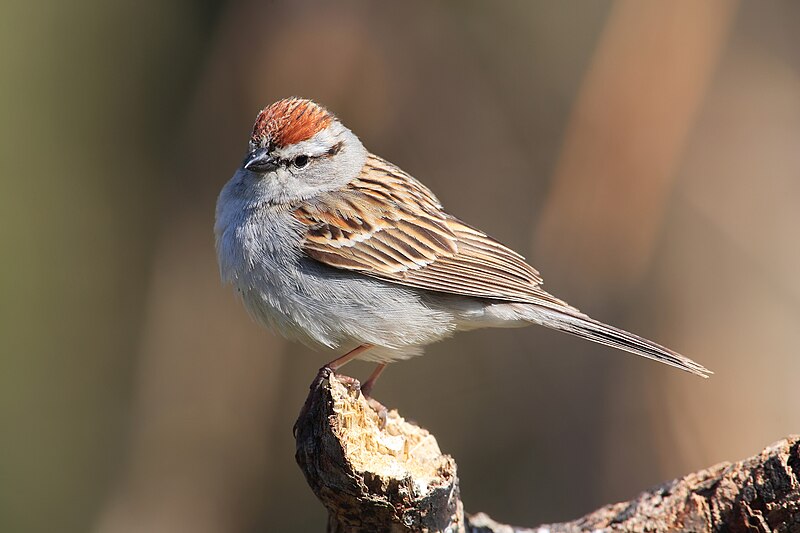
The Chipping Sparrow is a small, slender sparrow measuring 12 to 15 cm in length with a wingspan of about 21 cm and a weight of 11 to 16 grams. In breeding plumage, adults have a bright rufous cap, a crisp white eyebrow stripe, a bold black eye line extending through the lore, and a clean gray breast and nape contrasting with brown-streaked upperparts. In winter, the cap becomes brownish and streaked, the eyebrow is buffier, and the overall appearance is more muted. The bill is small and conical, typical of seed-eating sparrows.

Diet

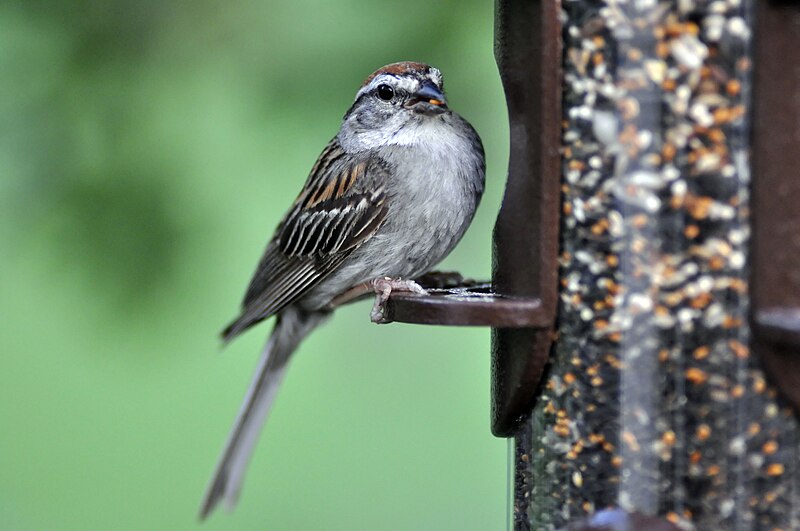
Grass seeds, weed seeds, and the seeds of various herbaceous plants form the staple diet throughout the year. During the breeding season, insects become an important protein source, including caterpillars, beetles, grasshoppers, crickets, moths, and spiders, which are especially critical for feeding nestlings. They also eat small fruits and berries when available. Chipping Sparrows forage primarily on the ground, hopping through short grass and leaf litter to pick up seeds.

Activity Pattern

Diurnal (Active during day)
Kingdom: Animalia
โ†’
Phylum: Chordata
โ†’
Class: Aves
โ†’
Order: Passeriformes
โ†’
Family: Passerellidae
โ†’
Genus: Spizella
โ†’
Species: S. passerina

Scientific Name

Spizella passerina
Breeding Season
March through August
Nesting Season
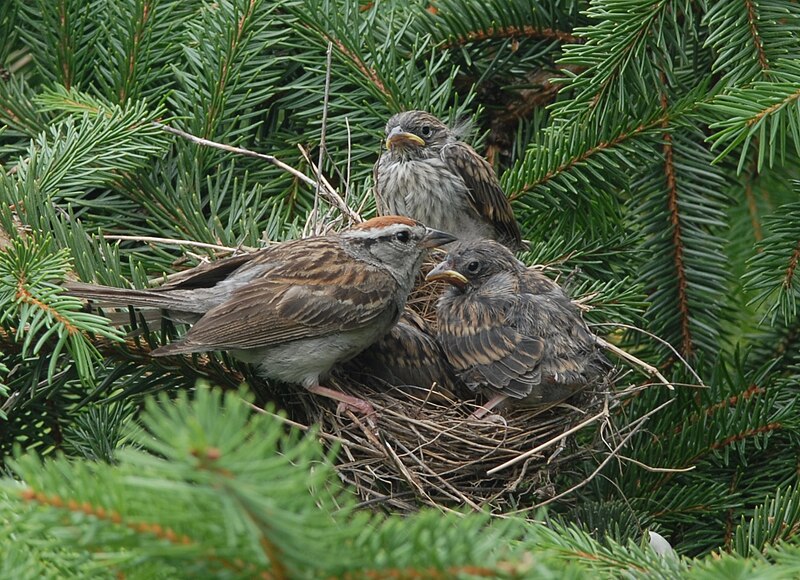
April through July; nests are placed in conifers or dense shrubs within 15 feet of the ground, built as a loose open cup of grass, weeds, and rootlets lined with fine grass and animal hair
Migration Pattern
Partial migrant; northern populations migrate to the southern United States and Mexico for winter, while southeastern populations may be year-round residents or short-distance migrants
Lifespan
3 to 5 years on average in the wild; the oldest recorded individual was at least 10 years, 11 months old

Behavior

Chipping Sparrows are approachable, relatively tame birds that forage on the ground in small flocks, often on lawns, roadsides, and picnic areas. They get their name from the sharp "chip" call note given throughout the day. The male's song is a rapid, dry trill on a single pitch, often delivered from an exposed perch in a tree. During the breeding season, pairs become territorial, with the female building a characteristically flimsy nest often lined with horsehair or fine animal hair. Outside of breeding season, they gather in loose flocks that may mix with other sparrow species. They are frequent hosts for Brown-headed Cowbird eggs.

Ecological Role

Chipping Sparrows play a role in seed consumption and weed control, feeding heavily on grass and weed seeds that might otherwise proliferate. During the breeding season, they help control insect populations by consuming caterpillars, beetles, and other invertebrates. They are an important prey species for small hawks such as Sharp-shinned Hawks and Cooper's Hawks, as well as for snakes and mammals. Their ground-foraging behavior contributes to seed dispersal and nutrient cycling in grassland and edge habitats.

Active Seasons

Spring Summer Fall Winter

Activity Pattern

Diurnal (Active during day)
Habitat Types

Forest
Grassland
Urban

Geographic Distribution

The Chipping Sparrow breeds across most of North America from Alaska and Canada south through the United States to Mexico and Central America. In winter, northern populations concentrate in the southern United States and Mexico. In the River Island Conservancy area near Augusta, GA, Chipping Sparrows are common residents found year-round, with numbers bolstered by northern migrants in winter. They inhabit open pine and mixed woodlands, forest edges, suburban lawns, parks, and gardens throughout the Piedmont region and along the Savannah River corridor.

Elevation Range

0-5000 ft

Local Abundance

Common

Conservation Status

Least Concern

This species is widespread and abundant. No immediate threat to survival.

Threats & Impacts

Habitat loss from urbanization and intensive agriculture, Brown-headed Cowbird nest parasitism which significantly reduces reproductive success, competition for food and nest sites with House Sparrows and House Finches, pesticide use reducing insect prey during the breeding season, and predation by house cats and other domestic animals. Populations have been declining gradually since the early 1900s.

How You Can Help

  • Report sightings to contribute to population monitoring
  • Support habitat conservation efforts
  • Follow guidelines when observing wildlife
No field notes or observations available for this species.

Contribute Your Observations

Have you spotted this species? Your observations help us track populations and understand behavior patterns.

Submit an Observation

Gallery