
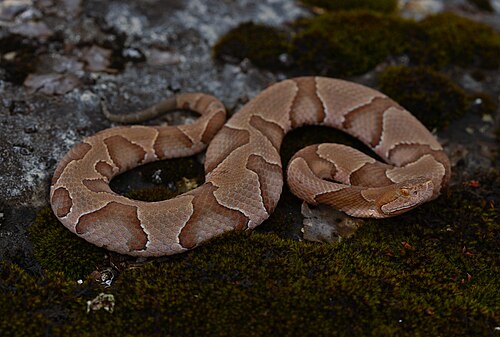
Copperhead

Copperhead

Agkistrodon contortrix

Dangerous Least Concern

Quick Facts

Kingdom: Animalia
Abundance: Common
Habitat: Forest
Active Seasons: Spring, Summer, Fall
Activity: Diurnal (Active during day)
Lifespan: 6 - 8 years

Stocky pit viper with distinctive hourglass-shaped crossbands (often darker bands narrow over the back and wider on the sides), coppery/orange-brown head, and vertical pupils; juveniles often have a yellow-tipped tail used for luring prey.

Diet

Small mammals, amphibians, insects (juveniles often take more invertebrates).

Activity Pattern

Diurnal (Active during day)
Kingdom: Animalia
→
Phylum: Chordata
→
Class: Reptilia
→
Order: Squamata
→
Family: Viperidae
→
Genus: Agkistrodon
→
Species: A. contortrix

Scientific Name

Agkistrodon contortrix
Breeding Season
Feb - May and Aug - Oct
Nesting Season
N/A (live-bearing); young typically born late summer – fall
Migration Pattern
No migration (non-migratory)
Lifespan
6 - 8 years

Tracks or Signs

Shed skins; basking individuals; juveniles’ yellow tail tip; often found near leaf litter/rocks/logs.

Behavior

Generally solitary; ambush predator; relatively tolerant of some human-modified habitats.

Ecological Role

Predator controlling rodent populations; prey for raptors/other predators.

Safety Warning

This species can be dangerous to humans. Exercise caution and maintain a safe distance if encountered.

Active Seasons

Spring Summer Fall

Activity Pattern

Diurnal (Active during day)

Habitat Types

Forest

Geographic Distribution

Widespread across much of the eastern United States.

Local Abundance

Common

Range Map

Range map

Conservation Status

Least Concern

This species is widespread and abundant. No immediate threat to survival.

Threats & Impacts

Road mortality, habitat loss, and intentional killing are commonly cited threats.

How You Can Help

  • Report sightings to contribute to population monitoring
  • Support habitat conservation efforts
  • Follow guidelines when observing wildlife

Additional Notes

Venomous; bites are medically significant though fatalities are rare with treatment.

Contribute Your Observations

Have you spotted this species? Your observations help us track populations and understand behavior patterns.

Submit an Observation