
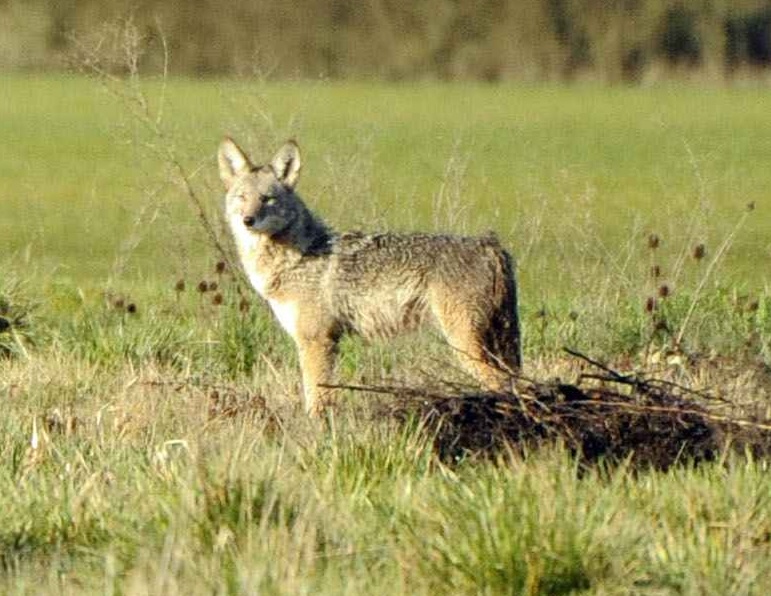
Coyote

Coyote

Canis latrans

Least Concern

Quick Facts

Kingdom: Animalia
Abundance: Common
Habitat: Urban
Active Seasons: Spring, Summer, Fall, Winter
Activity: Crepuscular (Active at dawn/dusk)
Lifespan: 10 - 12 years

Medium-sized wild canine with a narrow muzzle, upright ears, bushy tail (often carried low), and a gray-tan coat that can vary from buff to reddish or dark gray. Highly adaptable; found from deserts and grasslands to forests and urban edges; typically most active at dusk/night but can be seen any time.

Diet

Omnivorous - small mammals, carrion, insects, fruit, and human-associated food sources in urban areas.

Activity Pattern

Crepuscular (Active at dawn/dusk)
Kingdom: Animalia
โ†’
Phylum: Chordata
โ†’
Class: Mammalia
โ†’
Order: Carnivora
โ†’
Family: Canidae
โ†’
Genus: Canis
โ†’
Species: C. latrans

Scientific Name

Canis latrans
Breeding Season
January - March
Nesting Season
March - May
Migration Pattern
No seasonal migration, can shift locally with food pressure
Lifespan
10 - 12 years

Tracks or Signs

Tracks with 4 toes/claw marks, scat often containing hair/berries, howling/yipping.

Behavior

Often solitary or in mated pairs; can form small packs; highly adaptable behaviorally.

Ecological Role

Mesopredator controlling rodent populations; opportunistic scavenger.

Active Seasons

Spring Summer Fall Winter

Activity Pattern

Crepuscular (Active at dawn/dusk)

Habitat Types

Urban

Geographic Distribution

Widespread across North America; expanded substantially and now occurs across most of the continental U.S. and beyond.

Local Abundance

Common

Conservation Status

Least Concern

This species is widespread and abundant. No immediate threat to survival.

Threats & Impacts

Persecution/harvest, vehicle collisions, habitat changes (but overall very resilient).

How You Can Help

  • Report sightings to contribute to population monitoring
  • Support habitat conservation efforts
  • Follow guidelines when observing wildlife

Additional Notes

Extremely adaptable and benefits from fragmented landscapes and some urban resources.

Contribute Your Observations

Have you spotted this species? Your observations help us track populations and understand behavior patterns.

Submit an Observation

Audio Call

Video