Fish Crow

Fish Crow

Corvus ossifragus

Least Concern

Quick Facts

Kingdom: Animalia
Abundance: Common
Habitat: Wetland, Wetland, Forest, Urban
Active Seasons: Spring, Summer, Fall, Winter
Activity: Diurnal (Active during day)
Lifespan: 7 to 8 years typically in the wild; the oldest recorded individual lived 14 years and 6 months

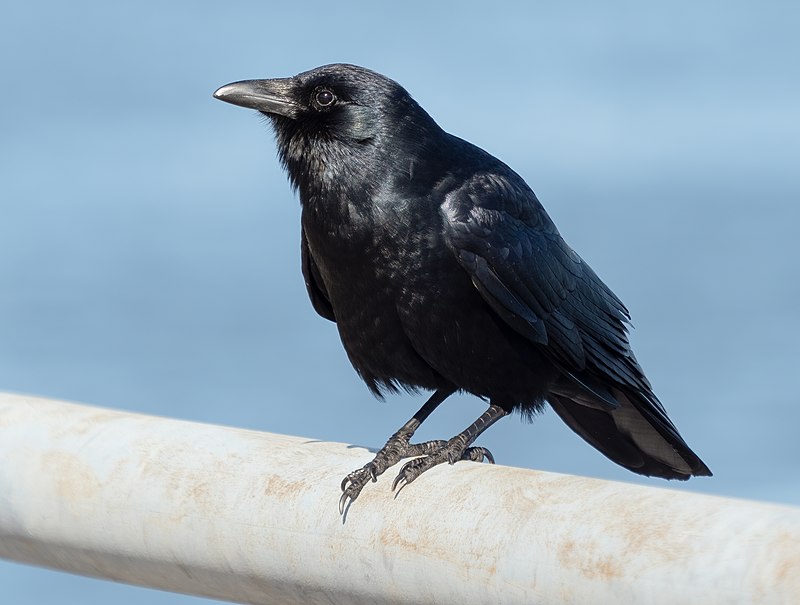
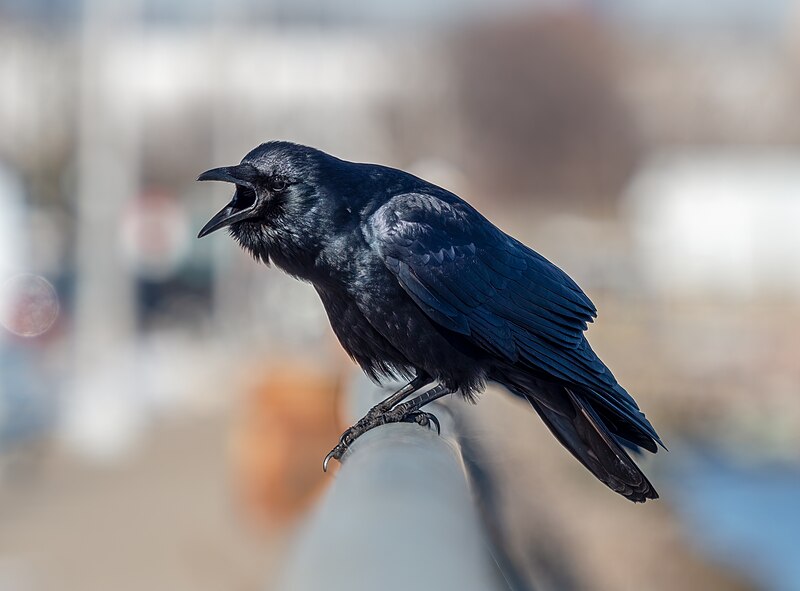
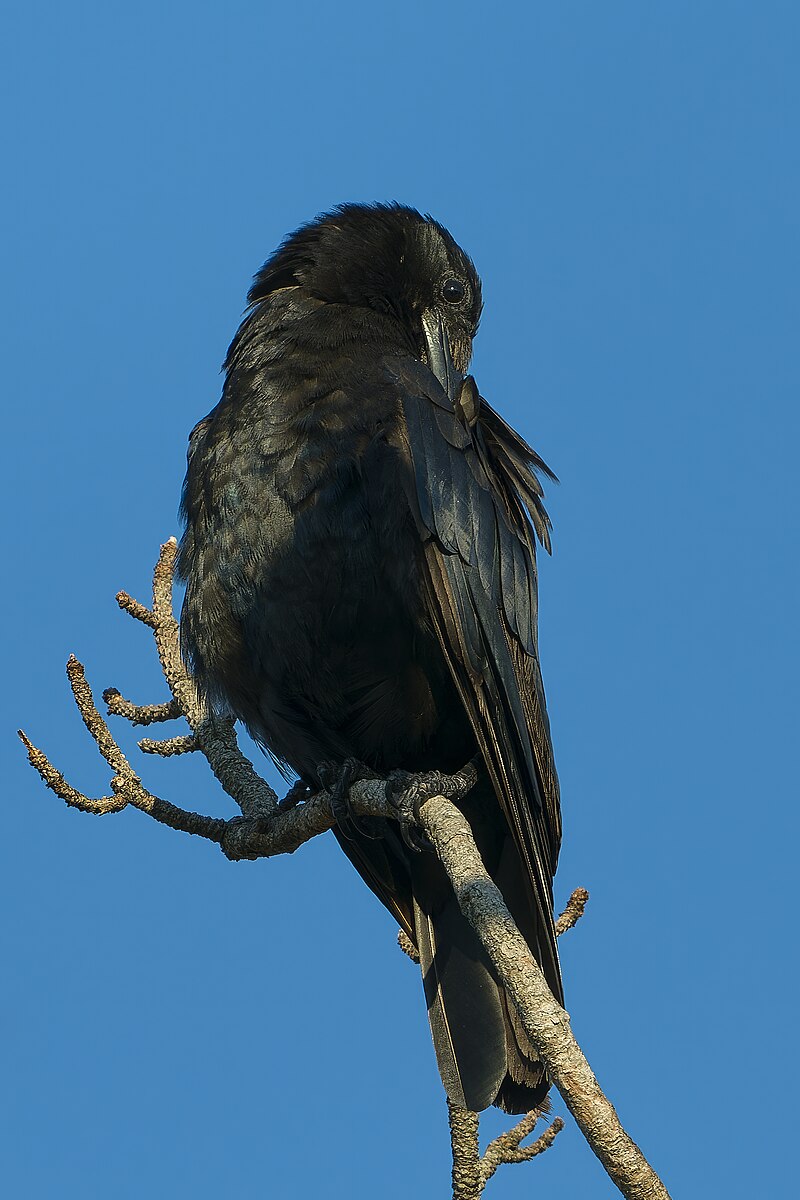
The Fish Crow is a medium-sized corvid measuring 34 to 40 cm in length with a wingspan of 85 to 99 cm. Its plumage is entirely glossy black with a subtle purplish or greenish iridescent sheen visible in good lighting. It closely resembles the American Crow but is slightly smaller with more pointed wingtips, a slimmer bill, and distinctly different vocalizations. The legs and feet are black, and the eyes are dark brown.

Diet

Omnivorous and highly opportunistic. Diet includes small crustaceans such as crabs and shrimp, various invertebrates, stranded and live fish, bird eggs and nestlings, berries, fruit, grain, carrion, and human food scraps. Known as a significant nest predator of colonial waterbirds such as herons and terns.

Activity Pattern

Diurnal (Active during day)
Kingdom: Animalia
โ†’
Phylum: Chordata
โ†’
Class: Aves
โ†’
Order: Passeriformes
โ†’
Family: Corvidae
โ†’
Genus: Corvus
โ†’
Species: C. ossifragus

Scientific Name

Corvus ossifragus
Breeding Season
Late March through mid-June
Nesting Season
April through June; female builds a bulky stick nest over 10 or more days, laying 2 to 6 eggs per clutch
Migration Pattern
Not a true migrant; makes short-distance seasonal movements, traveling further inland during warmer months and returning closer to waterways in colder months
Lifespan
7 to 8 years typically in the wild; the oldest recorded individual lived 14 years and 6 months

Behavior

Fish Crows are highly social, forming large foraging groups and communal roosts outside the breeding season. Breeding pairs hold small territories around nest trees and sometimes breed semicolonially. They are distinguished from American Crows by their distinctive nasal calls: a short 'kwok' and a two-noted 'uh-uh.' They are intelligent and adaptable, frequently foraging in urban parking lots, dumpsters, and along waterways. Females build the nest alone while males may accompany but do not help construct it.

Ecological Role

Fish Crows serve as important scavengers, cleaning up carrion and organic waste along waterways and in urban areas. As nest predators of colonial waterbirds, they exert natural population pressure on species like herons and ibises. They help disperse seeds of fruiting plants and contribute to nutrient cycling in riparian and coastal ecosystems.

Active Seasons

Spring Summer Fall Winter

Activity Pattern

Diurnal (Active during day)
Habitat Types

Wetland
Wetland
Forest
Urban

Geographic Distribution

The Fish Crow is found along the eastern and southeastern United States, from New England south through Florida and west along the Gulf Coast to Texas. It is strongly associated with aquatic habitats including rivers, estuaries, lakes, and coastal areas. In the Augusta, GA area and the River Island Conservancy, Fish Crows are common year-round residents found along the Savannah River and its tributaries, as well as in nearby urban areas, parking lots, and riparian forests throughout the Central Savannah River Area.

Elevation Range

0-2000 ft

Local Abundance

Common

Conservation Status

Least Concern

This species is widespread and abundant. No immediate threat to survival.

Threats & Impacts

Fish Crows face relatively few threats and their population is currently increasing. Potential threats include West Nile virus, habitat degradation of coastal and riparian areas, and persecution by humans. Their adaptability to urban environments has helped buffer them from many threats faced by less flexible species.

How You Can Help

  • Report sightings to contribute to population monitoring
  • Support habitat conservation efforts
  • Follow guidelines when observing wildlife
No field notes or observations available for this species.

Contribute Your Observations

Have you spotted this species? Your observations help us track populations and understand behavior patterns.

Submit an Observation

Gallery