
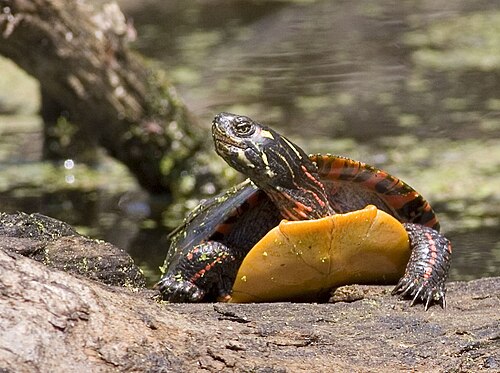
Georgia Painted Turtle

Georgia Painted Turtle

Chrysemys picta dorsalis

Least Concern

Quick Facts

Kingdom: Animalia
Abundance: Common
Habitat: Wetland
Active Seasons: Spring, Summer, Fall
Activity: Diurnal (Active during day)
Lifespan: 20 - 40 years

Small-to-medium freshwater basking turtle with dark smooth carapace and colorful striping; southern form distinguished by a prominent red/yellow dorsal stripe down the carapace. Frequently seen basking on logs/rocks in still or slow waters.

Diet

Omnivorous - aquatic vegetation/algae and small aquatic animals (insects, crustaceans, etc.).

Activity Pattern

Diurnal (Active during day)
Kingdom: Animalia
โ†’
Phylum: Chordata
โ†’
Class: Reptilia
โ†’
Order: Testudines
โ†’
Family: Emydidae
โ†’
Genus: Chrysemys
โ†’
Species: C. picta

Scientific Name

Chrysemys picta dorsalis
Breeding Season
Painted turtles mate in spring and autumn; breeding season commonly summarized as late spring - early summer
Nesting Season
Eggs laid late May - mid-July
Migration Pattern
No migration
Lifespan
20 - 40 years

Tracks or Signs

Basking groups on logs/rocks; slide marks at water edges; shells/eggshells near nesting sites.

Behavior

Basks communally; retreats quickly to water when disturbed.

Ecological Role

Omnivore in freshwater systems; helps cycle nutrients and control small aquatic invertebrates.

Active Seasons

Spring Summer Fall

Activity Pattern

Diurnal (Active during day)

Habitat Types

Wetland

Geographic Distribution

Southern painted form occurs in the southeastern U.S. (range shown on subspecies map).

Local Abundance

Common

Range Map

Range map

Conservation Status

Least Concern

This species is widespread and abundant. No immediate threat to survival.

Threats & Impacts

Wetland loss, road mortality near nesting, collection.

How You Can Help

  • Report sightings to contribute to population monitoring
  • Support habitat conservation efforts
  • Follow guidelines when observing wildlife
No field notes or observations available for this species.

Contribute Your Observations

Have you spotted this species? Your observations help us track populations and understand behavior patterns.

Submit an Observation