
Pine Warbler

Pine Warbler

Setophaga pinus

Least Concern

Quick Facts

Kingdom: Animalia
Abundance: Common
Habitat: Forest
Active Seasons: Spring, Summer, Fall, Winter
Activity: Diurnal (Active during day)
Lifespan: 4 to 6 years on average in the wild; the oldest recorded individual was a female at least 7 years, 10 months old

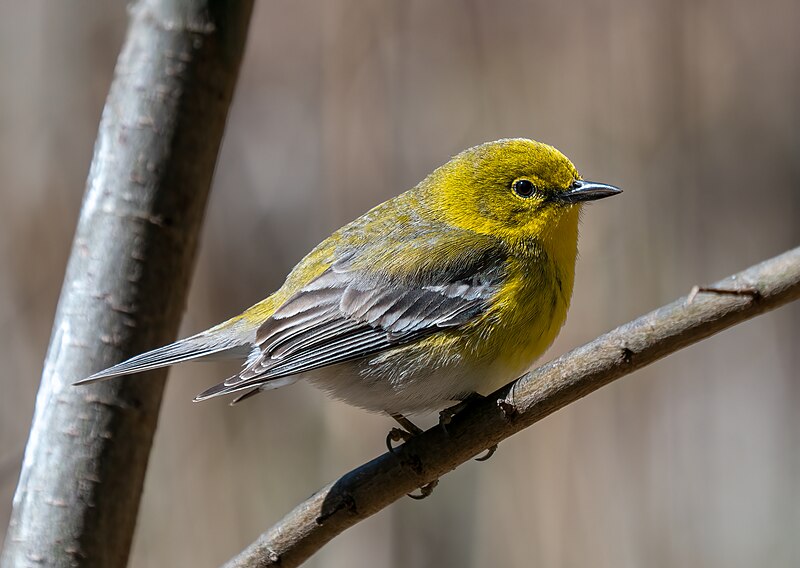
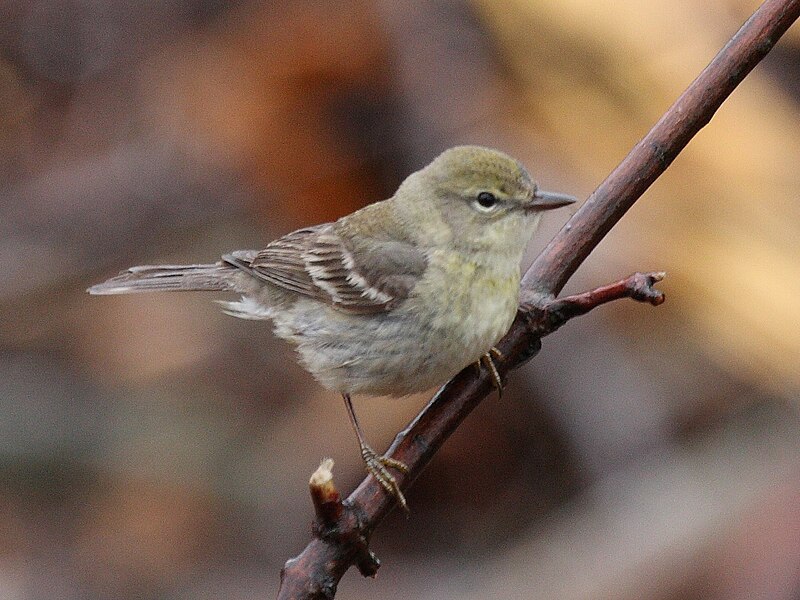
The Pine Warbler is a medium-sized New World warbler measuring 13 to 14 cm in length with a wingspan of 20 to 24 cm and a weight of 9 to 15 grams. Adult males are olive-green above with bright yellow throat and breast marked by blurry dark streaks, two prominent white wing bars, and yellowish spectacles around the eyes. Females and immatures are duller, with less yellow and more diffuse streaking. The bill is thin, relatively long, and pointed, and the legs are dark.

Diet

Insects and spiders form the primary diet during the breeding season, including caterpillars, beetles, grasshoppers, ants, moths, and bugs gleaned from pine bark and foliage. Unlike most other wood-warblers, Pine Warblers also regularly eat seeds, particularly pine seeds, grass seeds, and weed seeds, as well as berries and small fruits. This dietary flexibility allows them to overwinter further north than most warbler species. They occasionally visit suet feeders in winter.

Activity Pattern

Diurnal (Active during day)
Kingdom: Animalia
โ†’
Phylum: Chordata
โ†’
Class: Aves
โ†’
Order: Passeriformes
โ†’
Family: Parulidae
โ†’
Genus: Setophaga
โ†’
Species: S. pinus

Scientific Name

Setophaga pinus
Breeding Season
Late March through early June
Nesting Season
March through July; nests are placed toward the ends of pine branches, usually 30 to 50 feet above the ground, built as a deep open cup of pine needles, weed stalks, bark strips, and spiderweb lined with feathers
Migration Pattern
Short-distance migrant; northern populations migrate south in fall, but southeastern populations are largely permanent residents year-round
Lifespan
4 to 6 years on average in the wild; the oldest recorded individual was a female at least 7 years, 10 months old

Behavior

Pine Warblers are relatively sluggish compared to most warblers, foraging in a leisurely manner at all levels in pine woods from the ground to the treetops. They creep along trunks and branches, poking their bills into pine cones and bark crevices to extract insects and seeds. Males sing a musical trill from exposed perches high in pines, often one of the earliest spring songs heard in southeastern forests. They join mixed-species foraging flocks in winter, associating with chickadees, nuthatches, and Brown-headed Nuthatches in pine woodlands. Pairs may raise two to three broods per season.

Ecological Role

Pine Warblers play an important role in controlling insect populations within pine forest ecosystems, consuming large quantities of caterpillars, beetles, and other invertebrates that can damage pine trees. Their foraging behavior on bark and among pine needles helps regulate populations of pine-associated insect pests. As one of the few warbler species resident in southeastern pine forests year-round, they provide consistent insect control across all seasons. They also contribute to seed dispersal and serve as prey for sharp-shinned hawks, Cooper's hawks, and other forest predators.

Active Seasons

Spring Summer Fall Winter

Activity Pattern

Diurnal (Active during day)

Habitat Types

Forest

Geographic Distribution

The Pine Warbler breeds across eastern North America from southeastern Canada south to Florida and the Gulf Coast, with year-round populations throughout the southeastern United States. It is strongly associated with pine forests and is one of the few warblers that can be found in the Southeast year-round. In the River Island Conservancy area near Augusta, GA, Pine Warblers are common year-round residents in longleaf pine forests, loblolly pine stands, mixed pine-hardwood forests, and suburban areas with mature pine trees along the Savannah River corridor and surrounding Piedmont region.

Elevation Range

0-4500 ft

Local Abundance

Common

Conservation Status

Least Concern

This species is widespread and abundant. No immediate threat to survival.

Threats & Impacts

Loss and fragmentation of mature pine forests from logging, development, and fire suppression are the primary threats. Climate change models project significant shifts in suitable habitat over coming decades. Brown-headed Cowbird nest parasitism can reduce reproductive success. Pesticide use in pine plantations can reduce insect prey availability. Competition for resources with other warbler species during migration periods.

How You Can Help

  • Report sightings to contribute to population monitoring
  • Support habitat conservation efforts
  • Follow guidelines when observing wildlife
No field notes or observations available for this species.

Contribute Your Observations

Have you spotted this species? Your observations help us track populations and understand behavior patterns.

Submit an Observation

Gallery