
Wood Duck

Wood Duck

Aix sponsa

Least Concern

Quick Facts

Kingdom: Animalia
Abundance: Common
Habitat: Wetland, Wetland, Forest
Active Seasons: Spring, Summer, Fall, Winter
Activity: Diurnal (Active during day)
Lifespan: 3 to 4 years on average in the wild; the oldest recorded individual lived almost 22 years, 6 months

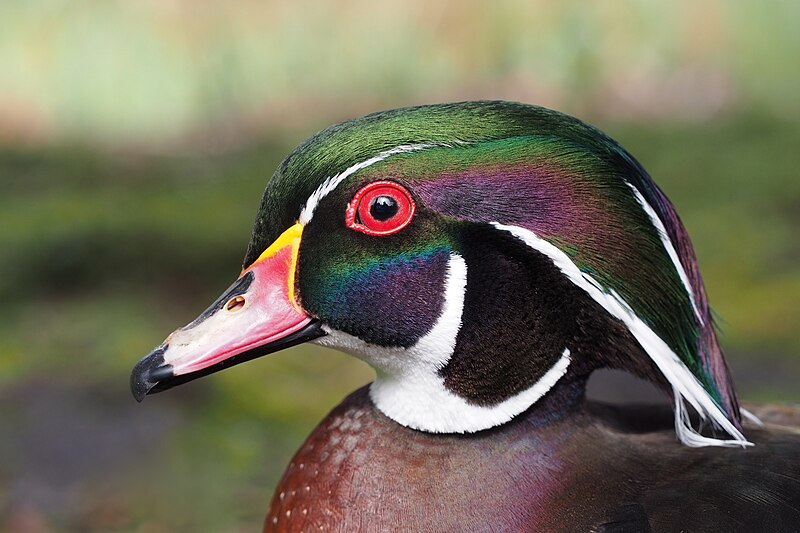
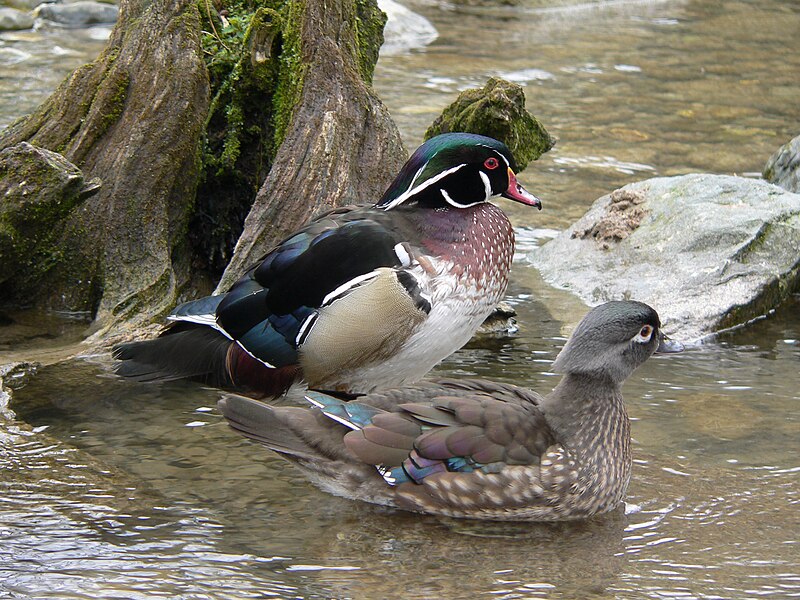
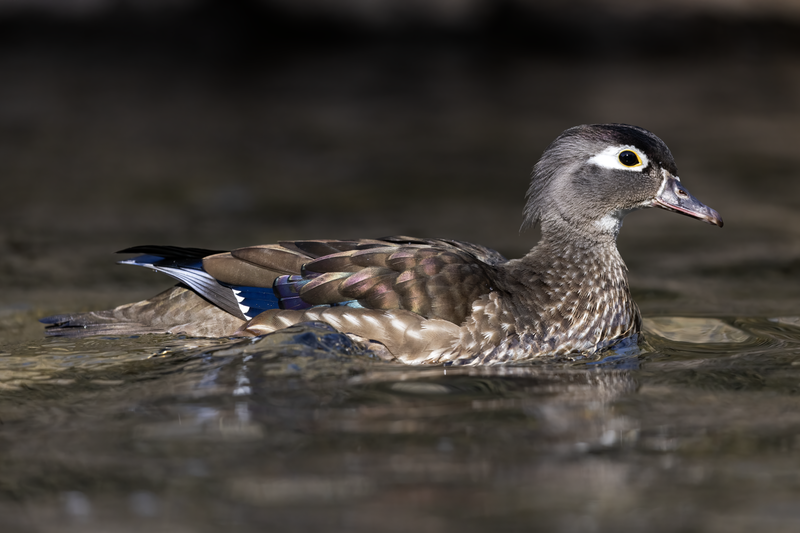
The Wood Duck is a medium-sized perching duck measuring 19 to 21 inches in length with a wingspan of 26 to 29 inches. The adult male is stunningly colorful with iridescent green and purple head plumage, bold white face stripes, a chestnut breast with white flecks, and red eyes. The female is more subdued with grayish-brown plumage, a white teardrop-shaped eye ring, and a whitish throat. Both sexes have distinctly crested heads and broad, squared tails.

Diet

Omnivorous with a diet that varies seasonally. Feeds on seeds, acorns (especially from water oaks, willow oaks, and pin oaks), aquatic plants including duckweed, wild rice, and smartweed. Also consumes aquatic and terrestrial invertebrates including insects, snails, and crustaceans, which are particularly important for breeding females and growing ducklings. Acorns often dominate the fall and winter diet.

Activity Pattern

Diurnal (Active during day)
Kingdom: Animalia
โ†’
Phylum: Chordata
โ†’
Class: Aves
โ†’
Order: Anseriformes
โ†’
Family: Anatidae
โ†’
Genus: Aix
โ†’
Species: A. sponsa

Scientific Name

Aix sponsa
Breeding Season
February through June in the southeastern US; pairs form in late winter and may produce two broods per season in southern populations
Nesting Season
February through July; nests in natural tree cavities or nest boxes near or over water, typically 4 to 50 feet above the ground; clutch of 7 to 15 eggs incubated for about 30 days
Migration Pattern
Partially migratory; northern populations migrate south in fall, but southeastern populations including those near Augusta, GA are largely year-round residents with some local seasonal movements
Lifespan
3 to 4 years on average in the wild; the oldest recorded individual lived almost 22 years, 6 months

Behavior

Wood Ducks are agile perching ducks that can walk, swim, and fly with ease through dense wooded areas, using their sharp claws to perch on branches and nest in tree cavities. They are most active at dawn and dusk, often flying between roosting and feeding areas in small flocks. Males perform elaborate courtship displays in fall and winter. Females give a distinctive rising "oo-eek, oo-eek" call in flight. Day-old ducklings make a dramatic leap from the nest cavity, sometimes from heights of 50 feet or more, bouncing on the ground unharmed before following their mother to water.

Ecological Role

Wood Ducks are important seed dispersers for aquatic plants and wetland vegetation, and their consumption of acorns plays a role in oak forest dynamics. As cavity nesters, they are part of the cavity-nesting community that includes woodpeckers, owls, and squirrels. Their eggs and young are prey for raccoons, rat snakes, black bears, and various raptors. They serve as indicators of healthy forested wetland ecosystems.

Active Seasons

Spring Summer Fall Winter

Activity Pattern

Diurnal (Active during day)
Habitat Types

Wetland
Wetland
Forest

Geographic Distribution

The Wood Duck is found throughout the eastern United States from southern Canada to the Gulf Coast, with a separate population along the Pacific Coast. In the southeastern US, it is one of the most common and familiar waterfowl species. In the River Island Conservancy area near Augusta, GA, Wood Ducks are year-round residents found along the Savannah River, wooded swamps, beaver ponds, forested creeks, and bottomland hardwood forests. They are especially common in areas with mature trees that provide natural cavities for nesting, and they readily use nest boxes placed along waterways.

Elevation Range

0-4000 ft

Local Abundance

Common

Conservation Status

Least Concern

This species is widespread and abundant. No immediate threat to survival.

Threats & Impacts

Loss of mature bottomland hardwood forests reduces natural nesting cavities. Wetland drainage and degradation diminish feeding and brood-rearing habitat. Nest predation by raccoons and rat snakes is significant. Competition for nest cavities with European Starlings and squirrels. Historical overhunting nearly eliminated the species in the early 1900s, but conservation efforts including nest box programs have enabled a strong population recovery.

How You Can Help

  • Report sightings to contribute to population monitoring
  • Support habitat conservation efforts
  • Follow guidelines when observing wildlife
No field notes or observations available for this species.

Contribute Your Observations

Have you spotted this species? Your observations help us track populations and understand behavior patterns.

Submit an Observation

Gallery

Audio Call