
Yellow-rumped Warbler

Yellow-rumped Warbler

Setophaga coronata

Least Concern

Quick Facts

Kingdom: Animalia
Abundance: Common
Habitat: Forest, Grassland, Wetland, Urban
Active Seasons: Spring, Fall, Winter
Activity: Diurnal (Active during day)
Lifespan: 2 to 5 years on average in the wild; the oldest recorded individual was over 7 years old

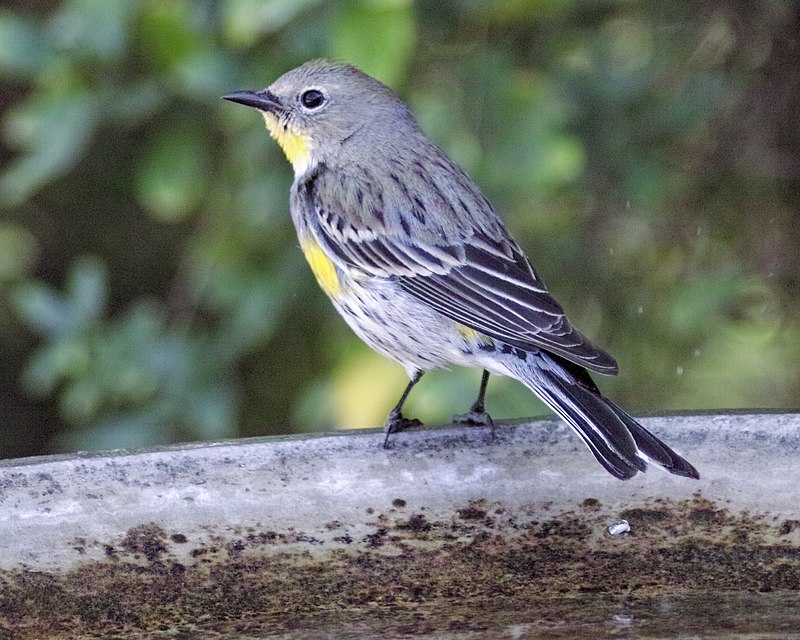
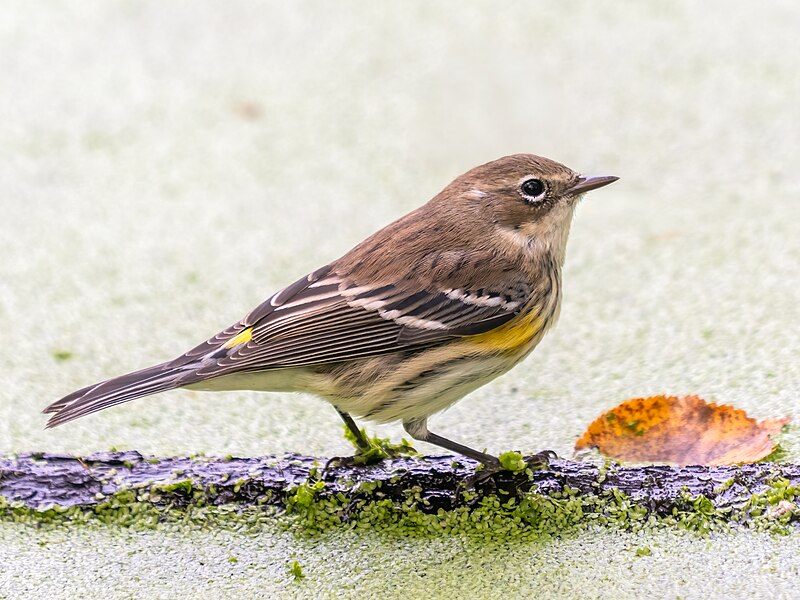
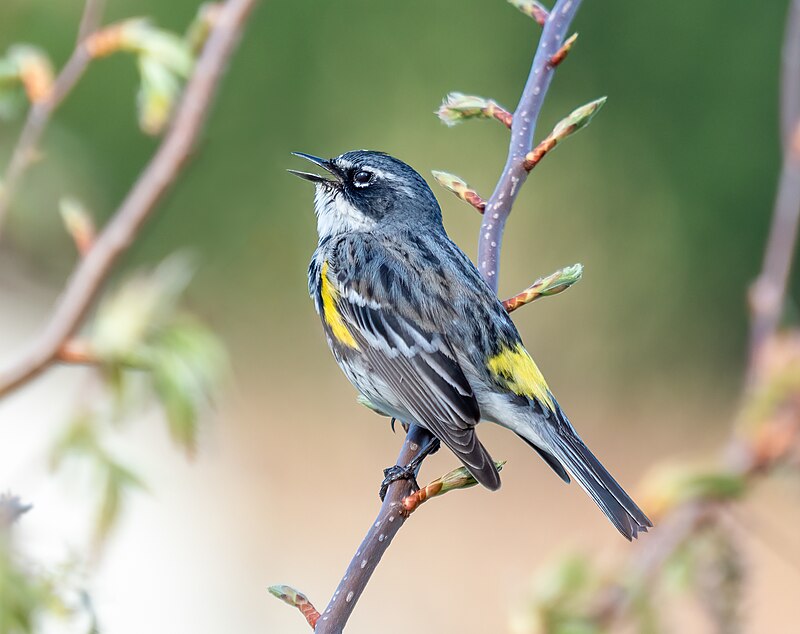
The Yellow-rumped Warbler is a medium-sized wood warbler averaging 14 cm in length and 12.5 grams in weight. The eastern Myrtle Warbler form, which occurs in the Augusta area, displays a streaked gray-blue back, white wing patches, and bold yellow patches on the crown, flanks, and rump during the breeding season. Males have a white throat and a contrasting black cheek patch with a white eyebrow stripe, while females and winter birds are browner and more subdued. The bright yellow rump patch is the most reliable field mark year-round and is conspicuous in flight.

Diet

Primarily insectivorous during the breeding season, feeding on caterpillars, beetles, gnats, aphids, and spiders by gleaning, hovering, and hawking insects from foliage. In fall and winter, the diet shifts heavily to fruits and berries, especially wax myrtle, bayberry, juniper, poison ivy, and Virginia creeper berries. The Yellow-rumped Warbler is uniquely able to digest the waxy coating on bayberries and wax myrtles, an adaptation that allows it to winter further north than any other warbler species.

Activity Pattern

Diurnal (Active during day)
Kingdom: Animalia
โ†’
Phylum: Chordata
โ†’
Class: Aves
โ†’
Order: Passeriformes
โ†’
Family: Parulidae
โ†’
Genus: Setophaga
โ†’
Species: S. coronata

Scientific Name

Setophaga coronata
Breeding Season
May through July on northern breeding grounds
Nesting Season
May through July; monogamous pairs build nests on horizontal branches in coniferous trees, with the female incubating 4 to 5 eggs for 12 to 13 days and typically raising two broods per year
Migration Pattern
Short- to medium-distance migrant; breeds across Canada and the northern US, winters across the southern US, Mexico, Central America, and the Caribbean. One of the last warblers to leave breeding grounds in fall and one of the first to return in spring.
Lifespan
2 to 5 years on average in the wild; the oldest recorded individual was over 7 years old

Behavior

Yellow-rumped Warblers are active, versatile foragers that employ multiple feeding strategies including gleaning insects from bark and leaves, hovering to pick from branch tips, and sallying out to catch flying insects. During winter, they form large loose flocks and frequently associate with other species in mixed foraging groups. They are one of the most abundant and widespread warblers in North America, and their characteristic sharp "check" call note is one of the most frequently heard bird sounds in southeastern woodlands during the cooler months. They are often seen flashing their yellow rump patch as they fly between foraging perches.

Ecological Role

Yellow-rumped Warblers are important insect predators during the breeding season, helping to control forest pest populations including spruce budworm and other caterpillars. In winter, they serve as key seed dispersers for wax myrtle and bayberry, spreading these shrubs through their droppings. Their abundance makes them a significant prey species for small hawks such as Sharp-shinned Hawks and Merlins during migration.

Active Seasons

Spring Fall Winter

Activity Pattern

Diurnal (Active during day)
Habitat Types

Forest
Grassland
Wetland
Urban

Geographic Distribution

The Yellow-rumped Warbler has one of the broadest ranges of any North American warbler. The Myrtle form breeds across boreal forests from Alaska to Newfoundland and south through the northern United States and the Appalachian Mountains. In winter, it is found across the southeastern US, along the Gulf Coast, and into Mexico and Central America. In the River Island Conservancy area near Augusta, GA, Yellow-rumped Warblers are abundant winter residents and migrants, arriving in October and departing by late April. They are commonly found in woodlands, thickets, and hedgerows along the Savannah River corridor, often in large flocks foraging on wax myrtle and bayberries.

Elevation Range

0-5000 ft

Local Abundance

Common

Conservation Status

Least Concern

This species is widespread and abundant. No immediate threat to survival.

Threats & Impacts

Generally stable populations with an estimated global breeding population of 170 million. Potential threats include habitat loss on breeding grounds from logging of boreal forests, collisions with buildings and communication towers during migration, and pesticide use reducing insect prey. Climate change may alter the timing of insect emergence on breeding grounds, creating mismatches with nesting cycles.

How You Can Help

  • Report sightings to contribute to population monitoring
  • Support habitat conservation efforts
  • Follow guidelines when observing wildlife

Additional Notes

The Myrtle Warbler form (eastern) and Audubon's Warbler form (western) were formerly considered separate species and were lumped into Yellow-rumped Warbler in 1973. Recent genetic studies suggest they may be split again in the future. Birds observed in the Augusta, GA area are of the Myrtle Warbler form.

Contribute Your Observations

Have you spotted this species? Your observations help us track populations and understand behavior patterns.

Submit an Observation

Gallery