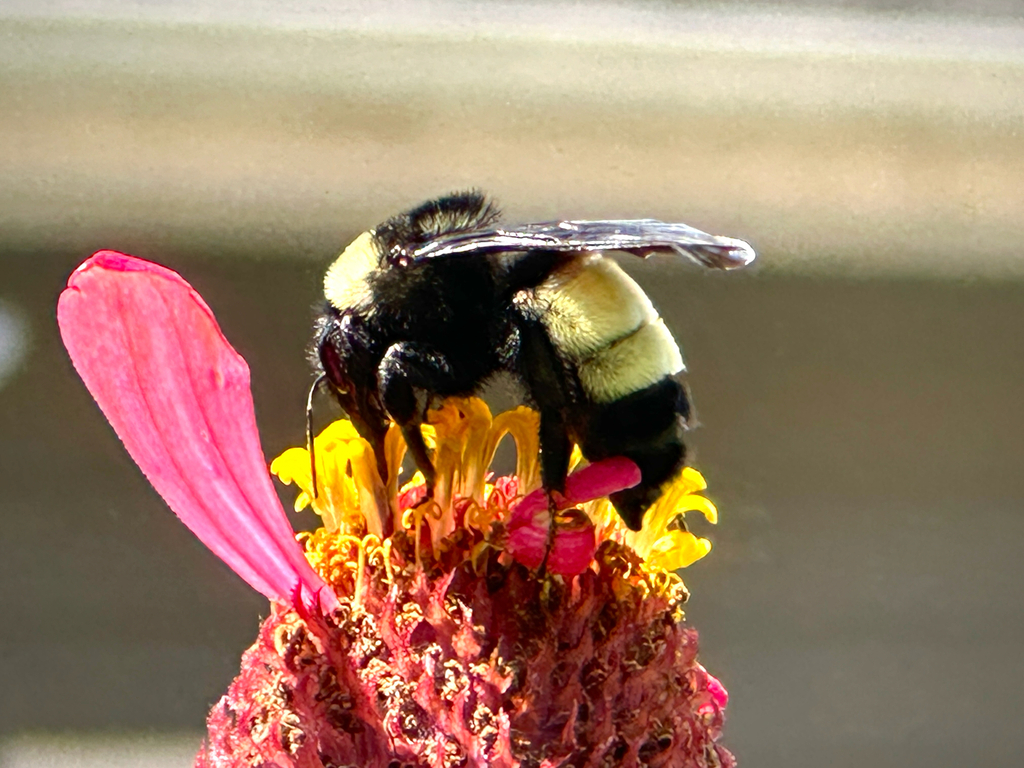
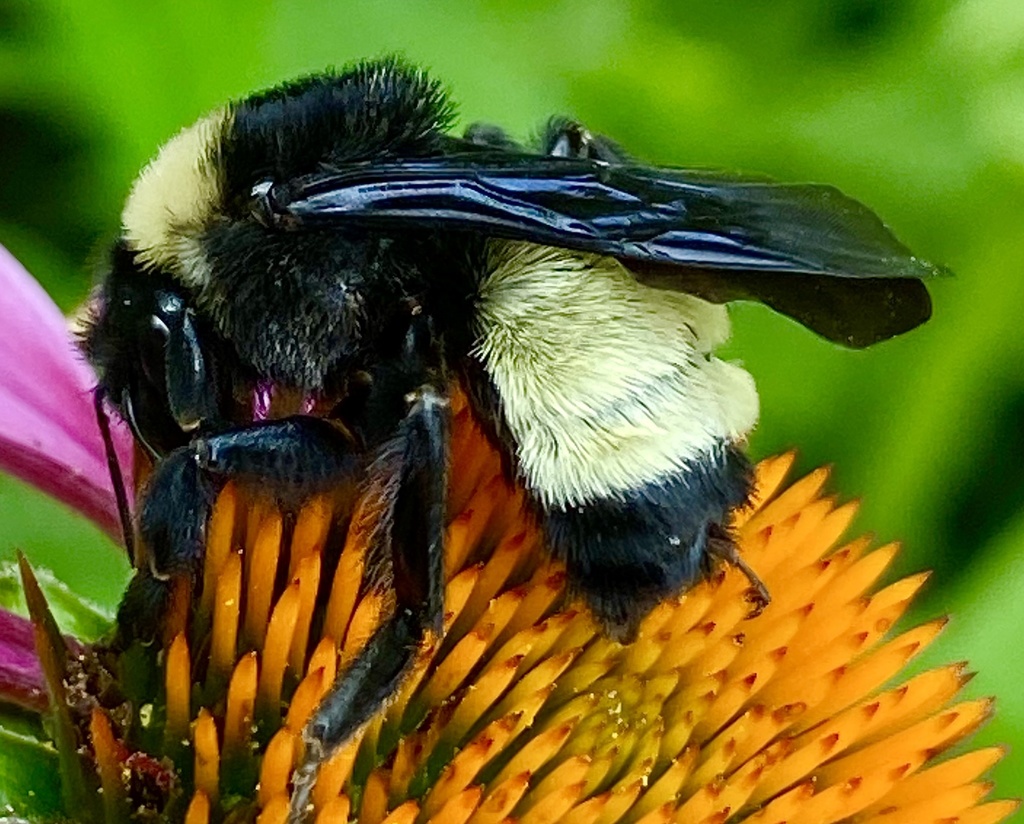
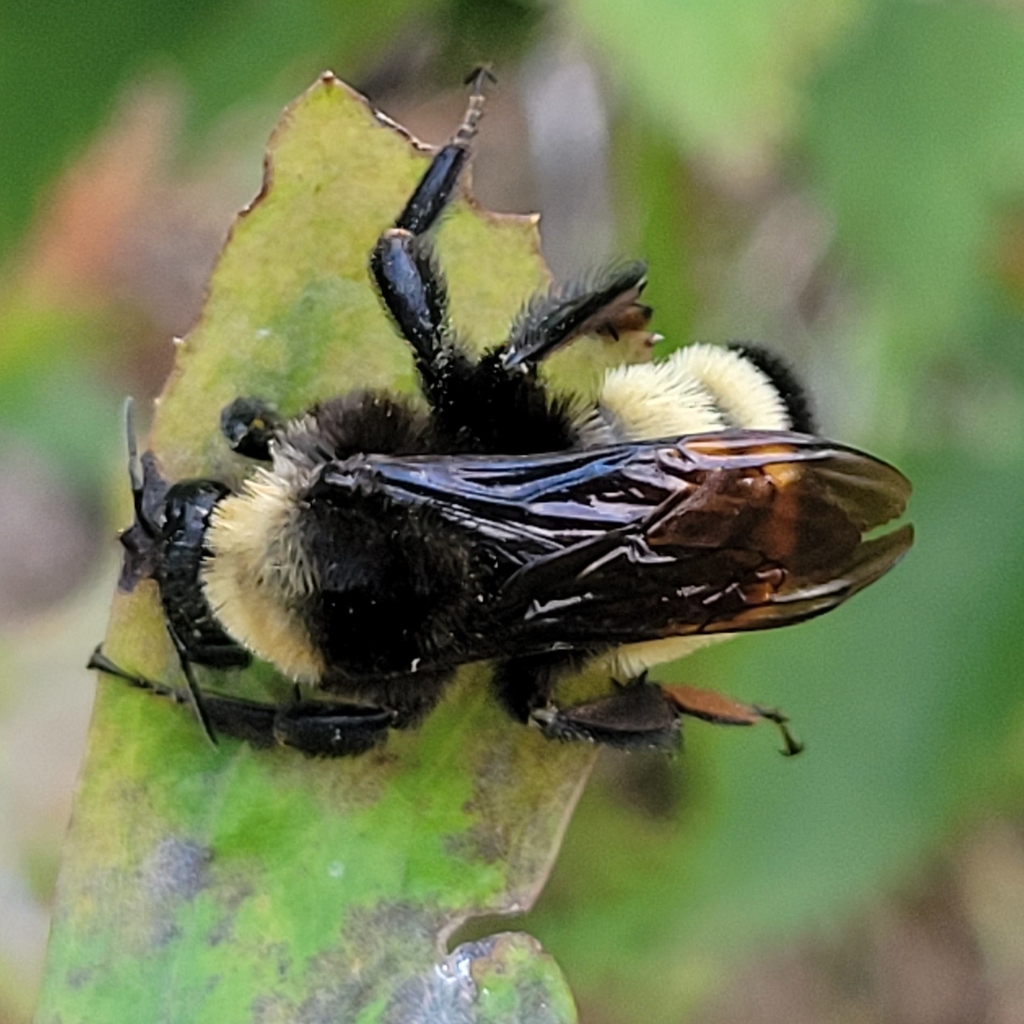
A threatened species of bumblebee native to North America. It is relatively large and very fuzzy. Compared to other native bumblebees, Bombus pensylvanicus tends to be paler yellow and with a different pattern of yellow and black banding. Once the most prevalent bumblebee in the southern United States, populations of Bombus pensylvanicus have decreased significantly in recent years.
American Bumblebee
Bombus pensylvanicus
Threatened
Vulnerable
Quick Facts
Kingdom:
Animalia
Abundance:
Uncommon
Habitat:
Grassland, Urban
Activity:
Diurnal (Active during day)
Overview
Forages nectar from flowers, especially clover and sunflowers.
Diurnal (Active during day)
Classification
Kingdom:
Animalia
→
Phylum:
Arthropoda
→
Class:
Insecta
→
Order:
Hymenoptera
→
Family:
Apidae
→
Genus:
Bombus
→
Species:
Bombus pensylvanicus
Scientific Name
Bombus pensylvanicus
Behavior & Ecology
Behavior
Unlike many of our native solitary bees, American Bumblebees are highly social and form annual colonies consisting of a single queen, female workers, and males. New queens emerge from their underground overwintering site in late May and June. The queen must immediately forage to rebuild her body reserves. Once she finds a suitable nest site, she collects nectar and pollen from flowers to support the production of her eggs. The bees nest mostly on the surface of the ground, among long grass or hay stacks, but occasionally underground.
Ecological Role
Native bees are crucial to pollination of plants including agricultural crops.
Activity Pattern
Diurnal (Active during day)
Habitat & Distribution
Habitat Types
Geographic Distribution
Ranges from the Eastern Great Plains to eastern and central U.S. and southern Canada, and Mexico. The species has become rarer, declining in number mainly in northern parts of its range.
Local Abundance
Uncommon
Conservation
Conservation Status
Vulnerable
This species faces a high risk of extinction in the wild.
Endangered Species
This species is at risk of extinction. Conservation efforts are critical for its survival.
Threats & Impacts
These friendly insects are in decline due to a multitude of issues, including but not limited to, habitat loss, pesticide use, pollution, and mites. The easiest way to help bumble bees is to plant native habitat.
How You Can Help
- Report sightings to contribute to population monitoring
- Support habitat conservation efforts
- Follow guidelines when observing wildlife
- Support conservation organizations working to protect this species
Contribute Your Observations
Have you spotted this species? Your observations help us track populations and understand behavior patterns.
Submit an Observation